Building an AI company? See how our two senior CMOs turn impressive AI technology into contracts buyers can justify. Fractional CMO for AI Companies →
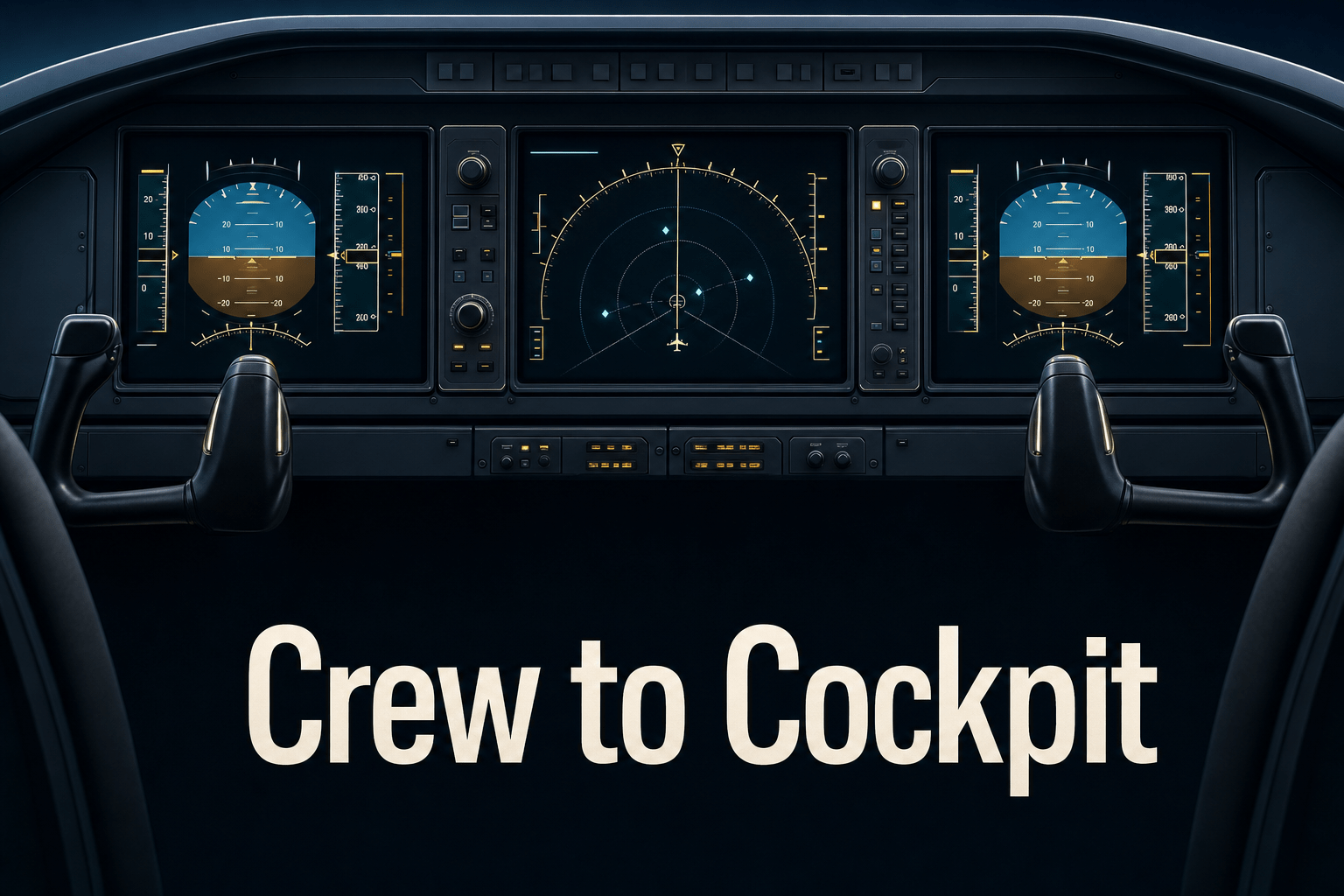
Bottom line: The compression is real and already underway, and pretending otherwise would be dishonest. AI is absorbing production work, and marketing organizations are getting smaller from the bottom up. But the pattern is not extinction, it is a shift from a crew to a cockpit. Commercial aviation went from five people on the flight deck to two as automation matured, and then stopped there for forty years, while the training standards for the remaining seats went up rather than down. Marketing leadership is heading somewhere similar: fewer people, far more leverage per person, and a much higher bar for the one who is accountable. The seat that survives is the one that can tell when the machine is confidently wrong.
Key Facts at a Glance
- The compression is measurable at the largest firms: WPP’s headcount fell from 108,044 to 98,655 in a single year, and Omnicom and IPG shed more than 23,000 positions combined (The Rank Masters analysis, 2026).
- Forrester revised its forecast sharply, moving from a projection of 7.5% agency job losses spread across 2024 to 2032 to 15% of agency jobs eliminated in 2026 alone (Forrester, via The Rank Masters).
- The cuts are concentrated at the bottom: 23% of agencies reduced junior copywriting headcount in 2025 with 31% planning further cuts in 2026, and junior production and design roles fell 19% in 2025 with 24% more planned (Gartner CMO Spend Survey 2026).
- Senior roles are moving the other way: demand for senior content strategists grew 18% year over year, and AI-literate specialist roles pay 15 to 25% above equivalent non-AI roles (Gartner; LinkedIn 2026 data).
- In-house teams are restructuring rather than simply shrinking, with the 2024 model of roughly 15 generalists giving way to 8 to 10 specialists augmented by AI, and agency headcount allocated per client down 15 to 30% while scope expanded (Digital Applied, 2026).
- Aviation’s precedent is precise: flight deck crews fell from five to three to two as the flight engineer, navigator, and radio operator were replaced by glass-cockpit systems, and a 1981 presidential task force concluded two-person crews were safe for transport-category aircraft (Aerotecnica Missili e Spazio, 2024; NTSB).
- Forty years later, two remains the standard. Automation kept advancing; the crew stopped shrinking, and the duties of the remaining seats changed rather than disappeared.
This guide draws on Peter Geisheker’s 20-plus years of B2B and direct-response marketing experience as founder and CEO of The Geisheker Group, Inc., a fractional CMO agency, where AI is embedded across engagements rather than treated as a separate service line. His starting observation is deliberately unfashionable. The common advice is that marketers must get to the forefront of AI, which is true, table stakes, and nearly content-free as guidance. The more consequential fact is that the ad platforms already run on AI whether or not a marketer uses a single AI tool: targeting, bidding, and creative rotation are algorithmic. So the job was never adopt AI tools, it is understanding what you feed the system and what you have told it to optimize toward. That distinction is the entire subject of this article, because it is also the thing that determines which marketing roles survive automation and which do not.
Table of Contents
- Is the Compression Real?
- What Does Aviation Tell Us About Where This Stops?
- Why Doesn’t the Logic Continue All the Way to Zero?
- What Does the Job Actually Become?
- Doesn’t This Argue for a Cheaper, AI-Native Operator?
- The Crew Model vs the Cockpit Model
- What Does Not Compress?
- Frequently Asked Questions
Is the Compression Real?
Yes, and the numbers are not ambiguous. WPP’s headcount fell from 108,044 to 98,655 in a year. Omnicom and IPG together shed over 23,000 positions. Forrester had projected 7.5% agency job losses spread across eight years and revised that to 15% eliminated in 2026 alone, which is not a timeline adjustment but a doubling of severity compressed into a fraction of the period (The Rank Masters, 2026).
The shape of the cuts matters more than the total. They are concentrated at the base of the pyramid: 23% of agencies reduced junior copywriting headcount in 2025 with 31% planning more, and junior production and design roles fell 19% with a further 24% planned (Gartner CMO Spend Survey 2026). Meanwhile demand for senior content strategists rose 18% year over year, and AI-literate specialist roles command 15 to 25% premiums. In-house teams show the same pattern in a different form, with the older model of roughly fifteen generalists giving way to eight to ten specialists working alongside AI systems (Digital Applied, 2026).
It is worth stating plainly that this is a description, not a celebration. Those are real jobs held by real people, many of them early in their careers, and the industry has an emerging problem it has not solved: the junior roles being eliminated are the same roles where marketers historically accumulated the reps that turn into judgment. Researchers have flagged this directly as a pipeline crisis. A profession that automates away its own training ground will feel the consequence a decade from now, and nobody currently has a good answer for it.
Explore Fractional CMO Services →
What Does Aviation Tell Us About Where This Stops?
Aviation ran this experiment first, and it is a better guide than speculation because it is finished. Mid-century airliners carried a crew of five: two pilots, a flight engineer, a navigator, and a radio operator. As avionics improved, those roles were absorbed one by one. Crews fell from five to three to two as glass-cockpit systems took over navigation, radio, and systems monitoring (Aerotecnica Missili e Spazio, 2024). In 1981 a presidential task force concluded that transport-category aircraft could be safely flown by two people because automation had replaced the flight engineer’s duties, and Boeing certified the 757 and 767 for two-pilot operation shortly after. The Boeing 747-400, which entered service in 1989, made the point visually: the same aircraft externally, with cockpit controls reduced from 971 to 365 and the flight engineer’s station simply gone.
Then two things happened that matter more for our purposes than the reduction itself. First, the compression stopped. Automation has advanced enormously in the thirty-five years since, and the standard is still two pilots. Single-pilot operations remain a subject of research and industry debate rather than practice. Second, the remaining job got harder, not easier. The duties changed substantially, shifting from continuous manual operation toward monitoring, systems management, exception handling, and judgment under degraded conditions, and the training and certification demands rose to match. Nobody concluded that better autopilots meant they could hire cheaper pilots.
One honest caveat about the analogy, because it has a real weakness. Aviation’s floor was set partly by safety regulation, and marketing has no equivalent forcing function. That means marketing could compress further than aviation did, and the two-pilot floor should not be read as a law of nature. What transfers is the pattern, not the specific number: automation absorbs the roles it can fully specify, and stops at the roles that require accountability and judgment under uncertainty.
Why Doesn’t the Logic Continue All the Way to Zero?
This is the question that has to be answered honestly, because the argument for compression does not obviously stop anywhere. If AI can replace a marketing team, why can it not replace the marketing leader as well, and then the CEO’s need for one? Anyone making the crew-to-cockpit argument owes an account of the floor.
There are two things holding it, and neither is sentimental. The first is accountability. A company cannot fire a model, cannot put one in front of a board to explain a missed quarter, and cannot hold one responsible for a decision that cost real money. Principals need agents who bear consequences, and that is a structural requirement rather than a preference. Geisheker’s version of this is blunt: his job is not marketing, his job is growing the company, and if a five-figure lead is sitting in a CRM going cold because no alert fired, he is not going to protect the org chart over the deal. He concedes the line is raising the alarm rather than seizing the function, since a marketing leader who habitually overrides sales leadership creates a different and worse problem. But that posture, someone who owns the outcome and will make himself unpopular over it, is not a function software performs.
The second is evaluation, and it is the more technical of the two. AI’s characteristic failure mode is not obvious error; it is plausible, well-formatted, confident output that happens to be wrong. That failure is invisible to anyone who cannot independently assess the work. Someone has to be able to tell, and being able to tell is a different skill from being able to generate. As long as the systems produce output that looks right whether or not it is right, the role of the person who can evaluate it becomes more valuable, not less.
What Does the Job Actually Become?
Mostly monitoring, exception handling, and deciding what the system should be optimizing toward, which is very close to what happened to the pilots.
The concrete version is worth spelling out, because it is where the abstract argument earns its keep. When Geisheker takes over a company’s advertising, the first thing he audits is conversion tracking, and broken tracking is the single failure he finds most often. His point about why it matters goes past the usual reporting complaint. When tracking is broken, the firm’s cost per lead and cost to acquire a customer are both fiction, and worse, because the ad platforms learn from the data they are fed, months of bad conversion data has quietly trained Google and Meta to go find the wrong people. The machine did exactly what it was told. It was told incorrectly, at scale, for a quarter. He adds the honest caveat that tracking can fire perfectly and still measure the wrong action, which is a subtler version of the same failure and harder to catch.
That is the cockpit job in one example. Nobody was flying the plane manually; the automation was working exactly as designed. The failure was in what it had been pointed at, and catching it required someone who could read the instruments rather than the dashboard summary. Building a defensible attribution model is the equivalent of verifying your instruments before departure, and it is the least glamorous and highest-leverage thing a modern marketing leader does. The same question is now being asked one function over about sales, in the debate over whether B2B sales reps are still needed and whether outbound SDRs should be replaced with AI, and the answers are converging on the same shape: automate the specifiable work, keep the humans who can judge it.


Try two senior CMOs before you hire them
30 minutes with both of us. No hard sell. Written plan in 3 business days.
Doesn’t This Argue for a Cheaper, AI-Native Operator?
It is the obvious objection, and it deserves a direct answer rather than a dodge. If the job is running AI systems, why not hire someone who grew up in those tools and costs a fraction of a senior operator?
Because AI collapsed the cost of execution, not the cost of being wrong. When anyone can generate fifty variants in an hour, output stops being the differentiator and the scarce skill becomes knowing what is worth testing, what to measure, and when a result is real rather than noise. Arguably the cost of being wrong has gone up, because a bad instruction now propagates across six figures of spend at machine speed, faithfully amplified. The tracking example above is exactly this: a fast, capable operator with excellent tool fluency and no instinct for auditing measurement will produce more wrong output faster than a slow one.
Tool fluency is genuinely valuable and it is learnable in months. Judgment about what to ask the machine comes from reps, and specifically from having been wrong expensively enough to develop an instinct for it. The market data reflects this already: junior production roles are being cut while senior strategist demand grows 18% and AI-literate senior roles carry a 15 to 25% premium. Organizations are not concluding that automation means they need cheaper people. They are concluding they need fewer, better ones. Note that this cuts against a comfortable reading too: it is not an argument that experience alone suffices. An experienced marketer who cannot evaluate a modern campaign is in exactly as much trouble.
The Crew Model vs the Cockpit Model
| Crew model (departmental) | Cockpit model (AI-augmented) | |
|---|---|---|
| Structure | ~15 generalists across channels | 8 to 10 specialists, or one leader plus systems at smaller scale |
| Where the work happens | Human production at volume | Systems produce; humans direct and verify |
| Leader’s core activity | Managing people and approving output | Monitoring, exception handling, deciding what to optimize toward |
| Bar for the leader | Manage the function competently | Evaluate machine output well enough to catch confident errors |
| Primary failure mode | Slow, expensive, inconsistent output | Fast, cheap, confidently wrong output at scale |
| Cost comparison | A fully loaded department | A senior operator plus tooling |
That last row is the one CEOs should sit with. The relevant comparison for senior marketing leadership is no longer a leader against a leader’s salary. It is a leader plus systems against the fully loaded cost of the department that model replaces, which changes the arithmetic considerably.
What Does Not Compress?
The tidy version of this thesis, one leader plus AI and no team, is too clean, and it is worth saying so before anyone plans a reorg around it. Several things resist compression.
Anything requiring a person in a room resists it: partnership negotiation, sales conversations with real stakes, press and analyst relationships, recruiting, and the internal political work of getting a company to actually do the thing it agreed to do. Deep domain specialization resists it, because the value is in knowledge the models have not absorbed. Original research and proprietary data resist it, because as generated content floods every channel, the scarce commodity becomes things that cannot be generated on demand: trust, distribution, and a genuinely differentiated position.
So the honest forecast is not a solo operator with a tool belt. It is a substantially smaller team with much higher leverage per person, led by someone who can evaluate what the systems produce and is accountable for the result. That is a real and significant change, and it is less dramatic than the version that gets shared on LinkedIn.
Frequently Asked Questions
Will AI replace the CMO?
Not on current evidence, but it is materially changing the job and shrinking the organization beneath it. Production and junior roles are being automated fastest, while senior strategic demand is growing. The role that survives is the one accountable for outcomes and capable of evaluating what the systems produce, which is closer to a pilot monitoring automation than a manager supervising a department.
Is marketing headcount actually falling because of AI?
Yes, measurably. WPP’s headcount fell from 108,044 to 98,655 in a year, Omnicom and IPG shed more than 23,000 combined, and Forrester revised its forecast to 15% of agency jobs eliminated in 2026 alone. The cuts are concentrated in junior copywriting, production, and design, while senior strategist demand grew 18%.
Why does the aviation comparison apply to marketing?
Because aviation ran the same experiment to completion. Crews fell from five to two as automation absorbed the navigator, radio operator, and flight engineer, then stopped, and the remaining roles became more demanding rather than less. The caveat is that aviation’s floor was partly set by safety regulation, which marketing lacks, so marketing may compress further.
If AI runs the campaigns, why hire an experienced marketing leader?
Because AI collapsed the cost of execution, not the cost of being wrong. A bad instruction now propagates across large spend at machine speed. The scarce skill is deciding what to test, what to measure, and whether a result is real, plus catching failures like broken conversion tracking that quietly train the ad platforms to target the wrong people.
Does this mean companies no longer need marketing teams?
No. The realistic shift is from roughly fifteen generalists to eight to ten specialists working with AI systems, not to a solo operator. Work requiring a person in a room, negotiation, partnerships, recruiting, high-stakes sales conversations, does not compress, and neither does deep specialization or proprietary research.
What should a CEO do about this now?
Stop evaluating marketing leadership on how large a team they can run and start evaluating them on whether they can direct and audit systems: how they would verify conversion tracking, structure a test, and tell a real result from noise. Then compare the cost of a senior operator plus tooling against the fully loaded department that model would replace.
Flying the New Aircraft
The compression is real, it is happening now, and the honest response is neither reassurance nor doom. The crew is getting smaller, the automation is doing more, and the seat that remains carries more responsibility and requires a higher standard than the one it replaced. That is what happened on the flight deck, and it is what is happening in marketing organizations right now.
The practical implication for a CEO is a change in what you are buying. Marketing leadership is no longer principally about managing a department; it is about pointing capable systems at the right objective and being able to tell when they are confidently wrong. If you are rethinking what your marketing function should look like, that is a conversation worth having before the reorg rather than after it.
About Peter Geisheker
Peter Geisheker is a fractional CMO and founder and CEO of The Geisheker Group, Inc., serving B2B, B2B SaaS, and PE/VC-backed companies. He has managed more than $50 million in annual advertising spend and works hands-on in the mechanics that determine whether automated systems produce results or expensive noise: campaign architecture, conversion tracking, experimental design, and attribution. With 20-plus years of translating marketing into measurable revenue, he provides senior marketing leadership to companies building leaner, AI-augmented marketing functions.
Rethinking what your marketing function should look like? Schedule a free consultation with Peter Geisheker. Connect with Peter on LinkedIn.
References and Sources
- The Rank Masters, “AI and the Future of Marketing Services” (2026): WPP headcount falling from 108,044 to 98,655 in one year; Omnicom and IPG shedding more than 23,000 combined positions; Forrester’s revision from 7.5% agency job losses over 2024 to 2032 to 15% eliminated in 2026 alone; Gartner CMO Spend Survey data on junior role reductions and 18% growth in senior content strategist demand. https://www.therankmasters.com/insights/benchmarks/ai-reshaping-professional-services-marketing
- Digital Applied, “Marketing Team Structure 2026: Headcount Benchmarks”: the shift from roughly 15 generalists to 8 to 10 AI-augmented specialists; agency headcount per client down 15 to 30% with expanded scope; AI-literate roles paying 15 to 25% above equivalent non-AI roles; emergence of AI operations and content quality roles. https://www.digitalapplied.com/blog/marketing-team-structure-2026-headcount-benchmarks
- Aerotecnica Missili e Spazio (Springer), “Enabling Civil Single-Pilot Operations: A State-of-the-Art Review” (2024): flight crews decreasing from five to three to two as the flight engineer, navigator, and radio operator were replaced by glass-cockpit functionality; two-crew remaining the prevailing standard with duties substantially changed. https://link.springer.com/article/10.1007/s42496-024-00223-7
- NTSB, “Introduction of Glass Cockpit Avionics into Light Aircraft” (Safety Study SS1001): the 1981 presidential task force determination that transport-category aircraft could be safely flown with a two-person crew because automation replaced flight engineer duties. https://www.ntsb.gov/safety/safety-studies/Documents/SS1001.pdf
- MDPI Aerospace, “Quantifying Pilot Performance and Mental Workload in Modern Aviation Systems” (2025): flight deck automation changing the nature of piloting tasks and the cognitive requirements of the role; two-crew cockpits adopted in the 1980s. https://www.mdpi.com/2226-4310/12/7/626
- The Flight Club, “What Happened to the Flight Engineer?”: Boeing’s 1982 certification of the 757 and 767 for two-pilot crews; the 747-400 reducing cockpit controls from 971 to 365 and eliminating the flight engineer’s station. https://www.theflightclub.it/en/2026/04/what-happened-to-flight-engineer/
- Revenue Memo, “Marketing Agency Statistics for 2026”: 23% of agencies reducing junior copywriting headcount in 2025 with 31% planning further cuts; 66% of agency owners agreeing junior team members face fewer career opportunities; median mid-market AI tool spend rising from $1,200 to $3,400 per month year over year. https://www.revenuememo.com/p/marketing-agency-statistics
- Digital Applied, “AI Marketing Statistics 2026”: near-universal AI adoption in marketing; organizational shape shifting toward senior strategic, technical, and AI-native roles over traditional production staff; the error of assuming junior headcount could be preserved without restructuring. https://www.digitalapplied.com/blog/ai-marketing-statistics-2026-adoption-data-points
- BCG, “Art and Algorithms: What CEOs Should Look For in an AI-First Chief Marketing Officer”: the CMO as growth architect designing data flows alongside technology leadership, with human-driven creative still required. https://www.bcg.com/publications/2025/what-ceos-should-look-for-in-an-ai-first-cmo
- Behind the CMO, “CMO Tenure Statistics 2026”: average CMO tenure of roughly 4.2 years, and the least standardized scope in the C-suite. https://www.behindthecmo.com/resources/cmo-tenure-statistics/
- Airways Magazine, “Evolution of the Flight Crew: From a Team of Five to None?”: the disappearance of the flight engineer, navigator, and radio operator roles with the arrival of digital cockpits, and current debate over single-pilot operations. https://www.airwaysmag.com/legacy-posts/evolution-flight-crew
- Miinfotech, “How Enterprise CMOs Are Scaling Marketing with AI-Driven Team Models in 2026”: organizations building leaner marketing departments supported by AI rather than larger teams, with data quality and AI expertise cited as the principal constraints. https://miinfotech.com/how-enterprise-cmos-are-scaling-marketing-with-ai-driven-team-models-in-2026/
Free Written Growth Plan
Wondering if a fractional CMO is right for you?
Try us before you hire us. Book a free 30-minute working session with both of us and get a written growth plan you can use whether or not you hire us.
No hard sell on the call. Your plan arrives within 3 business days. See a sample plan