The Bottleneck in AI Marketing Isn’t the Technology. It’s the Leader Directing It.
The real constraint on AI in marketing is not the software; it is the leader directing it. Why AI-era marketing is a judgment problem, and how to staff for it.
The real constraint on AI in marketing is not the software; it is the leader directing it. Why AI-era marketing is a judgment problem, and how to staff for it.
Marketing headcount is compressing fast, but the pattern is not extinction. Aviation went from five crew to two and stopped, while the standard for the remaining seats rose. What marketing leadership becomes when the team is software.
Marketing leadership is hard to hire because the job changed from creative judgment to experimental discipline and hiring still screens for the old job. What changed, where the skills gaps are, and what a CEO should test for instead.
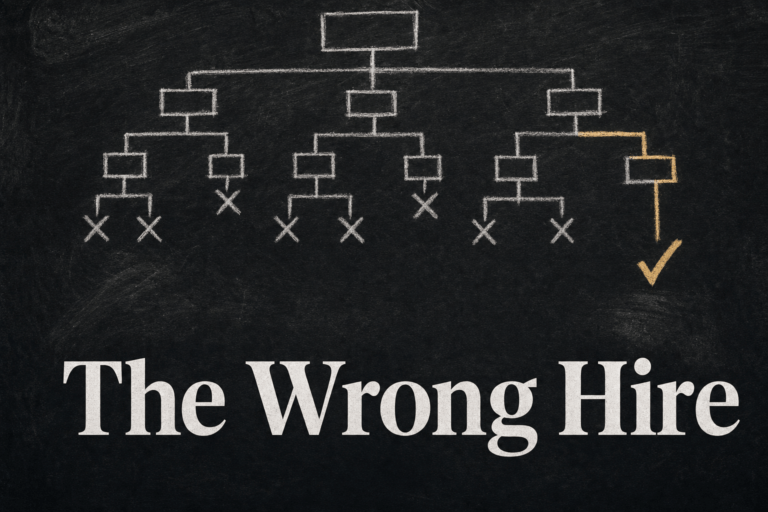
A fractional CMO is the wrong hire more often than the category admits. The five conditions where the model reliably fails, why the full-time alternative is not automatically safer, and how buyers hire the wrong person even when the model fits.

Commercial and personal injury law firms need completely different marketing playbooks: different buyers, channels, creative, and economics. What each playbook looks like, and what happens when a firm runs the wrong one.
The marketing leadership gap is the space between a mid-size firm’s marketing activity and its marketing leadership. Why firms fall into it, what senior leadership actually does, and how to close it without spending more.
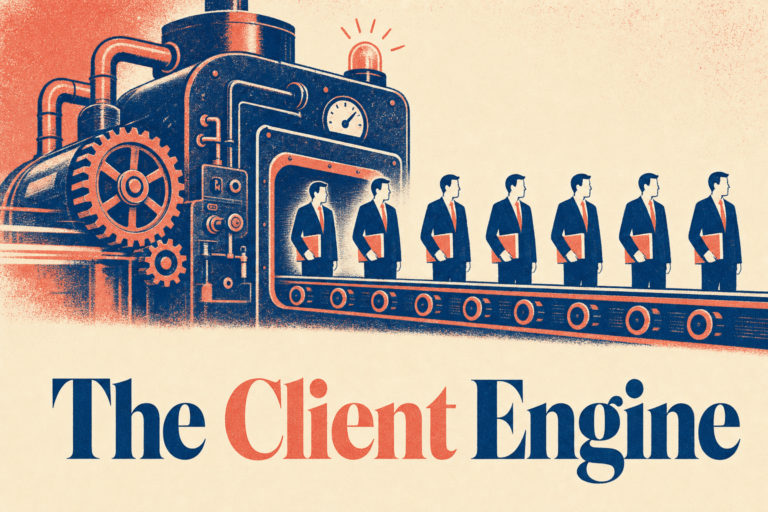
How law firms reduce rainmaker dependence by building a predictable, measurable client-acquisition engine that survives any one partner’s departure, with proof it works in legal, and who should own it.
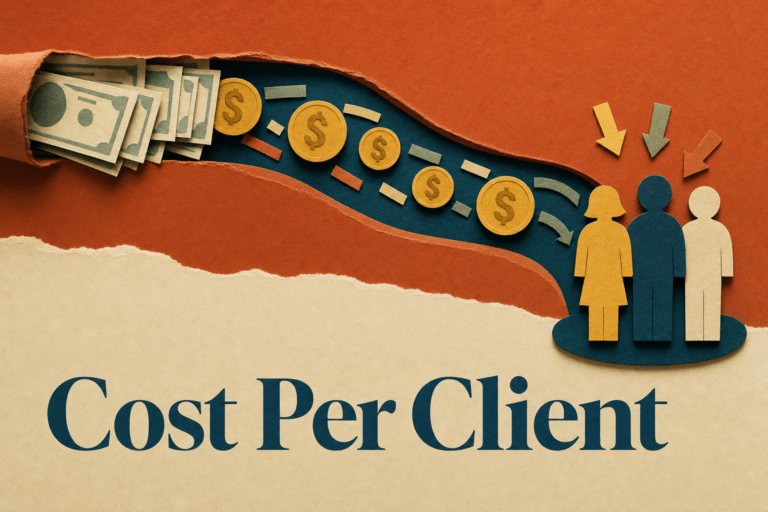
What should a law firm pay to acquire a client? Cost-per-client benchmarks by practice area and channel, why fewer than 10% of firms know their number, and how to lower it without cutting volume.
A fractional CMO for law firms builds a predictable, measurable client-acquisition engine so growth stops depending on a few aging rainmakers and uncontrolled referrals. What it is, what it builds, and which firms need one.
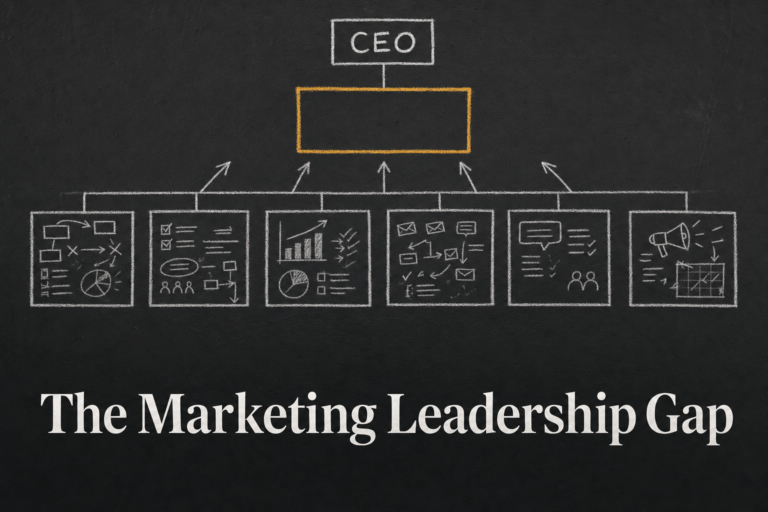
Growth often stalls after a PE deal because the founder who quietly ran marketing strategy steps back and nobody replaces him. How to spot and close it.