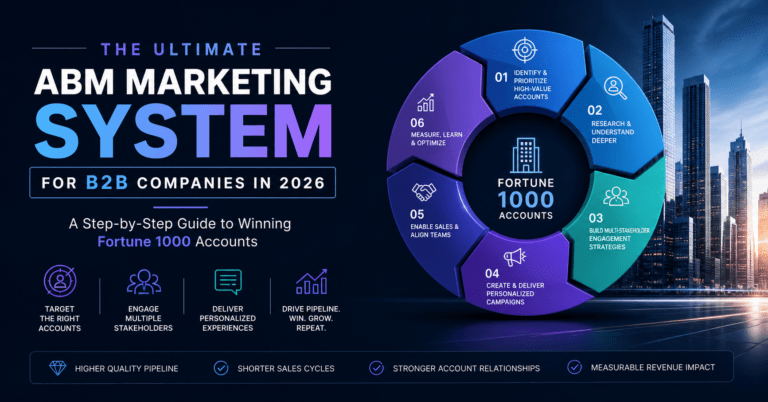

A great B2B case study follows a structured narrative arc: a specific client problem, the solution implemented, and quantified results. The most effective examples are 600–1,200 words, cite real metrics, include a direct client quote, and are written to serve the prospect’s decision process — not to promote the vendor. Structure: results-driven headline → challenge → solution → results → client quote → CTA.
The Most Powerful Sales Asset Most B2B Companies Get Wrong
Your prospective clients aren’t reading your case studies to find out what you do. They’re reading them to find out if you understand the problems they have.
That’s the insight most B2B marketers miss. And it’s why so many case studies — despite representing real results — fail to convert.
Here’s what the data tells us: according to a 2024 B2B buyer research report from 6sense, 81% of B2B buyers have already chosen a preferred vendor before they ever speak to a sales rep (https://6sense.com/science-of-b2b/2024-buyer-experience-report/). The decision is being shaped in the anonymous research phase — when prospects are reading content, reviewing competitors, and building a mental shortlist. Your case studies are in the field during that phase. The question is whether they’re working for you or against you.
At The Geisheker Group, I’ve seen first-hand how a well-constructed case study can accelerate the late stages of a B2B sale — collapsing a decision cycle that might otherwise take months. I’ve also seen how poorly written case studies — the kind that read like internal project reports — actively undermine trust at exactly the wrong moment.
This guide gives you the complete framework for writing a great B2B case study, from selecting the right client to optimizing each page for search and AI-powered discovery. If you’d like to discuss how a Fractional CMO can build and systematize your case study library and overall B2B content strategy, schedule a free consultation here.
Why B2B Case Studies Are Among Your Most Critical Marketing Assets
Before we discuss how to write a great B2B case study, it’s worth understanding precisely why they matter so much in B2B selling.
According to research compiled by Sopro, 75% of B2B marketers use case studies or customer stories as part of their content strategy — placing it among the top three most-used content formats in the industry (https://sopro.io/resources/blog/b2b-buyer-statistics-and-insights/). And there’s a reason it’s stayed that way for years: B2B purchases are high-stakes, committee-driven, and heavily researched.
The average buying group for complex B2B solutions now involves 8.2 stakeholders — a figure that has grown by more than 20% since 2015 (https://sopro.io/resources/blog/b2b-buyer-statistics-and-insights/). Each of those stakeholders has questions. Each needs reassurance. A well-written case study answers those questions before they’re even asked.
Case studies also serve a unique dual function in the B2B funnel:
- Top of funnel: They establish credibility with buyers who don’t know you yet, building brand authority and demonstrating expertise before a sales conversation begins.
- Bottom of funnel: They function as proof points during the evaluation and decision stages, giving your champion inside the prospect company something concrete to share with the buying committee.
No other content format does both jobs as well. That’s why learning how to write a great B2B case study isn’t a nice-to-have for growing B2B companies — it’s a core revenue-generating competency.
The Fundamental Mistake Most B2B Case Studies Make
Most B2B case studies are written as vendor-centric project recaps. They lead with the company’s methodology, describe the work performed in exhaustive detail, and end with a list of deliverables. They’re written from the inside out.
A case study that actually converts does the opposite. It builds a narrative around the client’s pain, demonstrates a deep understanding of the challenges faced, and positions your work as the catalyst for meaningful transformation. The prospect reading it should think: “That’s exactly the situation we’re in.”
As one B2B copywriting expert notes, potential customers don’t read case studies to learn about your process. They read them to see if you understand the problems they face (https://brewdigital.com/resources/article/how-to-write-a-b2b-case-study-that-actually-converts). That shift — from project report to customer success story — is the single most important change you can make to improve your case study effectiveness.
How to Write a Great B2B Case Study: The Proof Arc Framework
At The Geisheker Group, I use what I call the Proof Arc Framework for structuring B2B case studies that generate leads. It’s built on three principles: narrative tension, verifiable proof, and prospect relevance. Here’s how it maps to your case study writing process.
Step 1: Choose the Right Client Story
Not every client engagement makes a compelling case study. Before you write a single word, confirm that your story has the right raw material.
The best candidates share three characteristics:
Measurable results. The more specific the numbers, the more persuasive the story. “Increased inbound leads by 6X” is compelling. “Improved our marketing” is not. Prioritize clients where you have concrete, quantifiable outcomes you can cite.
Industry and persona alignment. Your case study needs to resonate with the prospects you want to attract. If you’re targeting mid-market B2B SaaS companies, your most relevant case study stars a mid-market B2B SaaS company. Pick clients whose job titles, company size, and core challenges mirror your ideal buyer profile.
Storytelling depth. The best case studies have a compelling before-and-after arc. What was genuinely at stake? Was the client losing market share? Were they burning budget on campaigns that weren’t producing results? The bigger the gap between “before” and “after,” the more powerful the story becomes.
Step 2: Conduct a Structured Client Interview
The quality of your case study is directly proportional to the quality of your client interview. This is where most case study writers leave enormous value on the table.
Schedule 30–45 minutes with your client contact. Send your questions in advance so they can prepare. The goal isn’t just to confirm facts — it’s to uncover the emotional texture of the story.
Core client interview questions for B2B case studies:
- What was the situation before we began working together? What were the key challenges, and why hadn’t they been solved yet?
- What were the business consequences of that situation? What was it costing you in revenue, time, or competitive position?
- Why did you decide to move forward with us specifically?
- What was the implementation process like from your perspective?
- What results have you seen? Can you share specific metrics — leads generated, revenue impact, cost reduction, time saved?
- What does that result mean for your team and your company going forward?
- Is there anything about working with us that surprised you?
That last question often yields the most quotable material. Surprises reveal genuine, unrehearsed opinions — and authentic quotes are among the most persuasive elements in any B2B case study.
Step 3: Write a Results-Driven Headline
Your case study headline is your first — and sometimes only — chance to earn the click. Most B2B case study headlines waste this opportunity with generic titles like “Company X Case Study” or “Success Story: ABC Corp.”
The strongest B2B case study headlines lead with the result and include a specific number. If the client is a recognizable brand, lead with the name (https://edifycontent.com/blog/b2b-case-studies-that-drive-revenue). Examples:
- “How [Client] Increased Qualified Pipeline by 312% in 90 Days”
- “[Client] Cuts Customer Acquisition Cost by 44% with AI-Driven Demand Generation”
- “From Stalled Growth to 6X Inbound Leads: The [Client] Story”
Step 4: Open With the Problem — Not With Your Company
Your case study introduction should establish the business problem before it mentions any solution. Put the prospect in the client’s shoes immediately.
Describe the situation with specificity: What industry? What company size? What was the competitive or operational challenge? What had they already tried before reaching out?
Emotional context matters here too. B2B buyers are making decisions that can change their careers — the personal stakes are higher than they appear on the surface (https://cxl.com/blog/b2b-case-studies/). Fear of failure, competitive pressure, pressure from the board — these are real drivers. Naming them creates immediate resonance.
Step 5: Describe the Solution With Strategic Clarity
The solution section is where most B2B case studies over-index. They describe every deliverable in exhaustive detail, as if a longer list of services equals more credibility. It doesn’t.
What earns credibility is showing that you understood the root cause of the problem and addressed it with a purposeful strategy. Focus on the why behind the solution, not just the what. If there were complications during implementation, acknowledge them honestly and explain how they were handled. That transparency builds trust in a way that a sanitized narrative never can.
Step 6: Lead the Results Section With Hard Numbers
This is the most important section of your entire case study. Don’t bury the numbers. Lead with them.
Present your results using a combination of:
- Primary headline metric (the most compelling result — e.g., “312% increase in qualified pipeline”)
- Supporting metrics (additional proof points — e.g., “sales cycle reduced from 90 days to 54 days”)
- Business context (what those results actually meant — e.g., “enabling the client to expand into two new markets without adding headcount”)
Use a visual results callout — a boxed section or a three-column stat summary — to make the numbers impossible to miss on a quick scan.
Step 7: Include a Substantive Client Quote
A direct quote from the client serves as social proof and emotional validation simultaneously. It signals: a real person, whose career and budget were on the line, trusted us — and it paid off.
The best quotes go beyond confirmation and reveal genuine feeling. Ask your clients open-ended questions and let them tell the story in their own words. Authentic, specific quotes convert. Generic validation language doesn’t.
Step 8: Close With a CTA That Respects the Reader’s Decision Stage
Your case study has earned the reader’s attention and trust. Close with a CTA that meets them where they are. If they’ve just read a story about a company facing challenges similar to their own, the most relevant next step is a conversation — not a form fill or a download. It’s an invitation to explore.
B2B Case Study Formats: Choosing the Right Delivery Method
| Format | Best Use Case | Ideal Length | Relative Cost |
|---|---|---|---|
| Web page (HTML) | SEO discovery, always-on sales enablement | 600–1,200 words | Low |
| PDF one-pager | Sales deck support, email nurture | 1–2 pages | Low–Medium |
| Video testimonial | High-trust late-stage conversations | 1–3 minutes | Medium–High |
| Slide / one-pager | RFP packages, presentations | 1 page | Low–Medium |
| Social media snippet | LinkedIn awareness, audience building | 100–200 words + graphic | Low |
For most B2B companies, the highest-ROI investment is a well-written web page case study with full SEO optimization. It works 24 hours a day, surfaces in search results when prospects are actively researching, and can be repurposed into every other format above.
SEO Optimization: The Step Most B2B Case Study Guides Skip
Here’s something most case study guides skip entirely: your case study pages need to be fully optimized for organic search.
Prospects searching for “[your service] for [their industry]” or “[their pain point] solution” may land directly on your case study if it’s structured correctly — before they’ve ever heard of your company. That’s earned discovery, and it happens precisely during the anonymous research phase when most B2B vendor preferences are formed.
SEO fundamentals for B2B case study pages:
- Title tag: Lead with the key result and include your core service category
- Meta description: Summarize the transformation in 150–160 characters, including the result and your service type
- H2 subheadings: Use language that mirrors the pain points your ideal buyer searches for
- Internal links: Link case study pages to your main service pages and contact page
- URL slug: Keep it short, descriptive, and keyword-relevant
- Image alt text: Describe visuals using result-oriented language that includes your service category
A case study that ranks organically for a buyer’s pain-point query will generate more trust than cold outreach, because the prospect found it on their own terms during their own research process.
You can see how The Geisheker Group structures results-focused case study pages at our client case studies page.
What to Do When a Client Won’t Go on the Record
It’s a common challenge. Your best result came from a client who signed an NDA, has a lengthy legal review process, or simply prefers to stay private. Here’s how to handle it without fabricating anything or losing the value of the story.
Anonymized case study. Use the industry, company size, and specific challenge — but replace the company name with a descriptor: “A mid-market B2B SaaS company serving the healthcare compliance sector…” This preserves narrative integrity while fully protecting the client.
Aggregate results reference. If you have multiple similar engagements with consistent results, write a data composite: “Across our B2B SaaS clients in the 50–200 employee range, average inbound lead volume increased by 4.8X within the first 90 days of engagement.” Label it clearly as aggregate data.
Gated full story. Reference the result in your public marketing materials without attribution. The full case study — with the client’s name — lives in a private location accessible during late-stage sales discussions.
What you should never do is invent a client, fabricate a metric, or present a hypothetical as a real engagement. Trust is a premium in B2B sales. A single discovered fabrication can permanently damage the credibility you’ve worked to build.
Looking to build a case study library that generates B2B leads around the clock? Fractional CMO Services from The Geisheker Group can architect the full system — from client selection and interview guides to SEO-optimized publication. Let’s talk about your situation.
How to Get Clients to Agree to a Case Study
Client approval is the most common bottleneck in case study production. Here’s how to improve your success rate significantly.
Ask at the peak of success. The best time to request a case study is immediately after a major milestone — when the client is genuinely excited about a result, not six months later when the enthusiasm has faded.
Make it easy for them. Offer to handle the entire production process. You write it, you design it, you submit it for their review. All they need to do is approve it. The less work required of the client, the higher your success rate.
Provide approval rights in writing. Explicitly confirm that nothing goes live without their sign-off. This removes the fear of misrepresentation and makes the ask feel low-risk.
Frame the value for them personally. A published case study featuring their company positions their internal team as smart, strategic decision-makers who solved a hard problem effectively. That’s positive career exposure, many client contacts find genuinely appealing.
Frequently Asked Questions About Writing B2B Case Studies
How long should a B2B case study be?
The ideal length for a B2B web page case study is 600–1,200 words. This is long enough to tell a complete, credible story with context, detail, and quantified results — but short enough to hold a busy executive’s attention through to the CTA. PDF case studies for sales enablement are typically condensed to a single or two-page spread. Video case studies should run no longer than 1–3 minutes (https://thesimonsgroup.com/proven-approaches-for-b2b-case-studies-with-examples-2/).
What metrics should a B2B case study include?
Include the metrics most meaningful to your target buyer. For B2B demand generation engagements, that typically means: lead volume change, pipeline value added, customer acquisition cost change, sales cycle reduction, and revenue impact. Specificity is critical — “increased leads significantly” is not a result. “Increased qualified inbound leads by 312% in 90 days” is.
Should B2B case studies be gated or ungated?
For maximum SEO benefit and top-of-funnel reach, publish your case studies as ungated web pages. Requiring a form fill to access a case study significantly reduces the number of people who will read it — including the 81% of buyers doing anonymous research before ever contacting a vendor (https://6sense.com/science-of-b2b/2024-buyer-experience-report/). Reserve gating for more comprehensive assets like detailed methodology guides or research reports.
How many case studies does a B2B company need?
Aim for at least one strong case study per major buyer persona or industry vertical you actively pursue. If you serve B2B SaaS companies, professional services firms, and industrial manufacturers, you need a compelling story for each. Depth in one category beats shallow breadth across many weak examples. Start with your two or three strongest results, publish them with full SEO optimization, and build from there.
What makes a B2B case study headline effective?
The most effective B2B case study headlines lead with a specific, quantified result, include the client name if it’s recognizable, and use a concrete number wherever possible. The headline should be framed from the client’s outcome — not your process. “How Beonic Achieved 100% Year-Over-Year SaaS Revenue Growth for Three Consecutive Years” is strong because it’s specific, credible, and immediately relevant to any SaaS executive evaluating their growth options.
Should B2B case studies include client quotes?
Always. A direct quote from the client is one of the most persuasive elements you can include. It provides third-party validation, adds emotional authenticity, and signals that a real human with real professional accountability stands behind the results. Even a single, strong, specific quote substantially increases a case study’s conversion effectiveness.
Can you write a B2B case study without naming the client?
Yes. An anonymized case study using an industry descriptor and honest metrics retains significant persuasive value. Clearly note that the client name is withheld at their request — most sophisticated B2B buyers understand and accept this approach. The metrics still need to be real and verifiable, and the narrative still needs to be specific and honest.
How do you promote a B2B case study after publishing it?
Don’t publish and wait. Share individual data points from the case study on LinkedIn, highlighting the result rather than just linking to the document. Include the most relevant case studies in email nurture sequences targeted to prospects in similar industries. Have your sales team send specific case studies to prospects facing similar challenges. Link internally from related service pages and blog posts. Consider a condensed LinkedIn article version to drive additional organic reach.
The Bottom Line on Writing Great B2B Case Studies
A great B2B case study is not a document about your company. It’s a story about your client’s transformation — told with enough specificity, emotional honesty, and quantified proof that a prospect in a similar situation recognizes themselves and decides you’re the right partner to help them achieve the same outcome.
That requires choosing the right client, conducting a substantive interview, building a results-first narrative, and publishing it in a format that’s discoverable, scannable, and built to earn trust. It also requires discipline: no fabricated data, no vague language, no vendor-centric structure that loses the reader before they reach the numbers that matter.
Done right, a B2B case study is one of the highest-ROI content investments your company can make. It works during the anonymous research phase when most B2B vendor preferences are actually formed. It gives your sales team proof they can deploy at the critical moment of late-stage evaluation. And it builds the kind of trust — the kind that comes from a real person saying “this worked for me” — that no amount of paid advertising can replicate.
If you’re building out your B2B marketing infrastructure and need senior-level strategic guidance on content, positioning, and demand generation, The Geisheker Group offers Fractional CMO services built specifically for B2B companies. I’d be glad to talk through your situation.
Schedule a free 30-minute consultation with Peter Geisheker →
About Peter Geisheker
Peter Geisheker is a Fractional CMO and founder of The Geisheker Group, Inc., a B2B marketing strategy firm specializing in demand generation, content marketing, and revenue growth for B2B and B2B SaaS companies. His client results include 6X inbound lead growth, 400%+ sales volume increases, and 100% year-over-year SaaS revenue growth for three consecutive years. He works with small and mid-size B2B companies that need senior-level marketing leadership without the full-time executive cost.
Ready to explore how a Fractional CMO can accelerate your B2B growth? Schedule a free consultation with Peter Geisheker.
References and Sources
- 6sense — 2024 B2B Buyer Experience Report: https://6sense.com/science-of-b2b/2024-buyer-experience-report/
- Sopro — B2B Buyer Statistics and Insights 2025: https://sopro.io/resources/blog/b2b-buyer-statistics-and-insights/
- Brew Digital — How to Write a B2B Case Study That Actually Converts: https://brewdigital.com/resources/article/how-to-write-a-b2b-case-study-that-actually-converts
- CXL — How to Write Better B2B Case Studies: 2 Lessons from Psychology: https://cxl.com/blog/b2b-case-studies/
- Omniscient Digital — Best Practices for Writing High-Converting B2B Case Studies: https://beomniscient.com/blog/writing-high-converting-b2b-case-studies/
- Edify Content — How to Write B2B Case Studies That Drive Revenue: https://edifycontent.com/blog/b2b-case-studies-that-drive-revenue
- WG Content — How to Write Compelling B2B Case Studies: https://wgcontent.com/blog/write-compelling-b2b-case-studies/
- Windmill Strategy — How to Write a Better B2B Case Study: https://www.windmillstrategy.com/how-to-write-case-study-b2b/
- The Simons Group — Proven Approaches for B2B Case Studies With Examples: https://thesimonsgroup.com/proven-approaches-for-b2b-case-studies-with-examples-2/