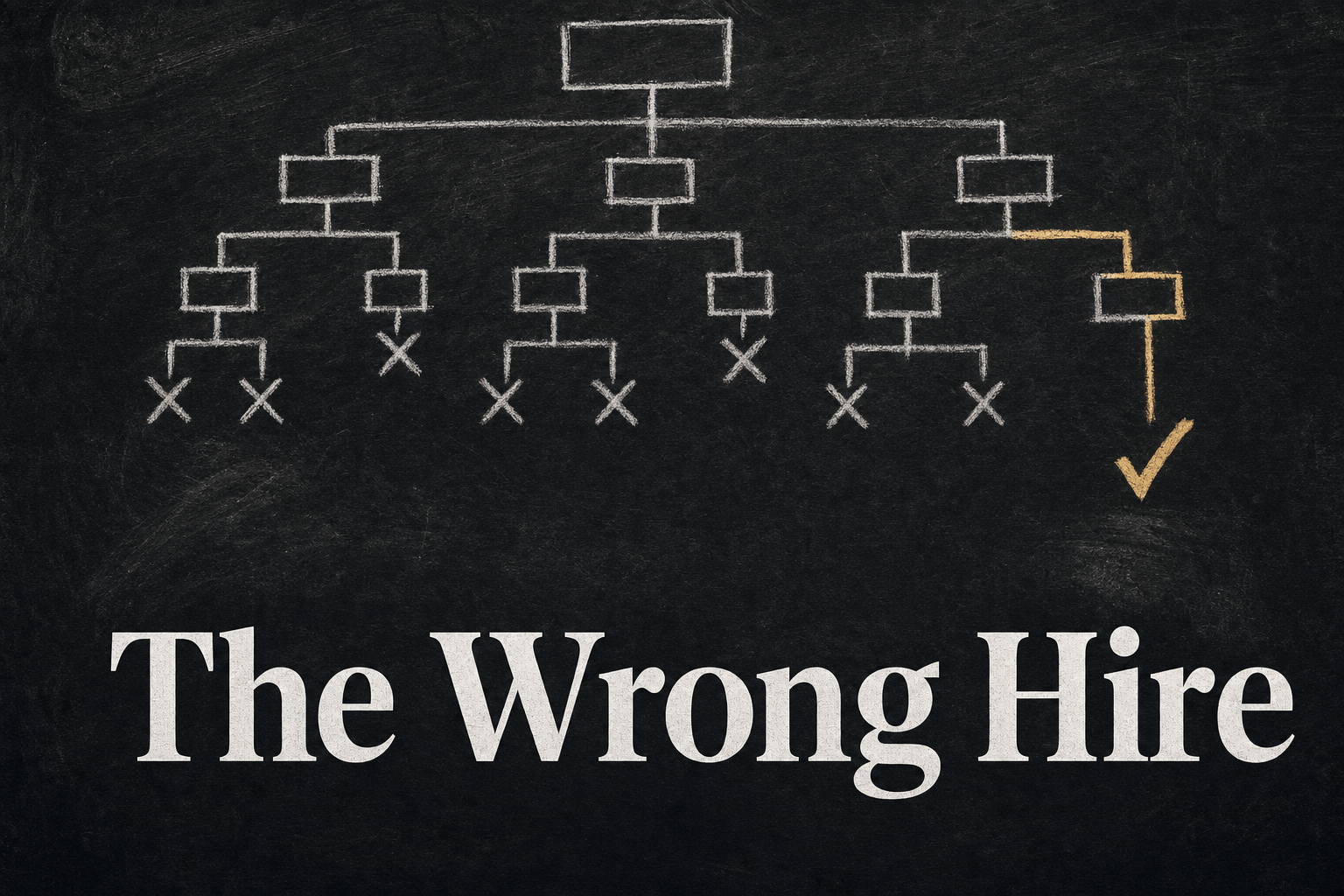
Bottom line: A fractional CMO is the wrong hire more often than the people selling the service admit. The model fails predictably when there is nobody to execute the strategy, when the real problem is not a marketing problem, when the owner will not actually delegate decisions, or when the engagement is scoped for three months against a build that takes a year. It also fails when the model fits but the person does not, because the title has no barrier to entry and the quality range is enormous. The model works in a narrower set of conditions than the marketing around it suggests: when a company has execution capacity but no senior direction, and someone needs to own the growth number. Knowing which situation you are in is worth more than any pitch.
Key Facts at a Glance
- The strongest public critique of the model, from SaaStr’s Jason Lemkin, is that fractional CFO arrangements tend to work because they supplement an existing finance team, while fractional CRO and CMO arrangements often do not solve the underlying problem (SaaStr).
- The CMO role has the least standardized scope of any C-suite position, which produces mismatched expectations between the company and whoever fills the role, fractional or full time (Behind the CMO, 2026).
- Most CMO searches are conducted without any marketing expert interviewing the candidate, which industry recruiters identify as a leading contributor to failed marketing hires (MarketPro, 2024).
- LinkedIn profiles mentioning fractional leadership grew from about 2,000 in 2022 to more than 110,000 in 2024, so the supply of people claiming the title has expanded faster than any means of verifying them (SHRM).
- The continuity argument for a full-time CMO is weaker than assumed: average CMO tenure at S&P 500 companies is 4.1 years, compared with 5.0 years for all C-suite roles (Spencer Stuart, 2026).
- 34% of Fortune 500 companies had no enterprise CMO in 2024, so even large companies are increasingly reshaping the role rather than filling it (Spencer Stuart).
This guide draws on Peter Geisheker’s 20-plus years of B2B and direct-response marketing experience as founder and CEO of The Geisheker Group, Inc., a fractional CMO agency, and it is written against his own commercial interest on purpose. Geisheker is blunt about a structural problem in his own category: the title has no barrier to entry, no credential, no licensing body, and nothing a buyer can verify from a website, so the quality range is enormous. Having sat in peer groups of working fractional CMOs, he was genuinely surprised by how thin the technical knowledge often was on campaign mechanics, testing, conversion optimization, and search. He is careful to concede the limits of that observation, since it is one operator’s biased sample and there are excellent practitioners in the field. The structural point stands regardless of the sample, and it is the reason this article spends more time on when the model fails than on when it works.
Table of Contents
- What Is the Honest Case Against Hiring a Fractional CMO?
- When Is a Fractional CMO the Wrong Hire?
- Isn’t a Full-Time CMO the Safer Choice?
- How Do You Hire the Wrong Person Even When the Model Fits?
- When Does the Model Actually Work?
- Wrong Hire vs Right Fit, Side by Side
- How Should a CEO Decide?
- Frequently Asked Questions
What Is the Honest Case Against Hiring a Fractional CMO?
The most credible critique comes from SaaStr’s Jason Lemkin, and it deserves to be stated at full strength rather than waved away. His argument is that the fractional model works well for finance because a fractional CFO typically supplements a team that already exists, reviewing and overseeing work that other people are doing, while fractional CRO and CMO arrangements frequently fail to solve the underlying problem. He describes interviewing a fractional CRO who spoke glowingly about his own performance for a CEO Lemkin knew, yet could not explain why his contract had not been renewed, and treats that disconnect as illustrative of the whole category.
That critique lands, and anyone selling this service who cannot engage with it honestly should not be trusted with your growth. The steelman version is this: a fractional executive is a part-time leader, and leadership without execution capacity underneath it produces documents rather than results. If a company has no team, no agency, and no budget, hiring senior strategic direction gives it a plan and no way to run the plan. That is a real failure mode, it happens constantly, and it is the buyer’s responsibility as much as the vendor’s to catch it before money changes hands.
Explore Fractional CMO Services →
When Is a Fractional CMO the Wrong Hire?
There are five conditions where the model reliably fails, and any one of them is enough to make it the wrong decision.
There is nobody to execute. This is the big one, and it is the core of Lemkin’s critique. A fractional CMO directs work; they are not a full-time pair of hands. If the company has no marketing team, no agency, and no budget to engage one, the engagement produces strategy that nobody implements. A company in this position usually needs execution capacity first, an agency or a capable specialist, and senior direction second.
The real problem is not marketing. If the product does not fit the market, if the sales team cannot close qualified opportunities, or if the pricing is wrong, no marketing leader fixes it. Companies frequently hire marketing leadership to solve a product or sales problem, then conclude the model failed when the underlying issue was never marketing’s to solve. Expecting a savior is its own failure mode, and it burns good operators and good companies alike.
The owner will not actually delegate. A fractional CMO who is overruled on every decision is an expensive source of advice nobody takes. If the founder intends to retain final say on channels, creative, spend, and messaging, the honest thing is to hire execution support instead and keep the strategy seat. There is nothing wrong with that choice; it is only wrong to pay for leadership and then not allow it to lead.
The engagement is scoped too short. Building a demand engine, installing measurement, and producing trustworthy results takes quarters, not weeks. A three-month contract against a nine-to-twelve-month build guarantees the engagement ends before the work compounds, which is exactly the pattern in the non-renewal story above. Short pilots are reasonable, but they should be scoped to prove a specific thing, not to deliver a transformation.
The company needs a full-time operator. Some situations genuinely require daily, in-the-weeds presence: a company in crisis, a complex launch, or an organization large enough that marketing leadership is a full-time job. Those companies should hire full time, and a good fractional CMO will tell them so.
Isn’t a Full-Time CMO the Safer Choice?
Not automatically, and the data complicates the assumption. The standard argument for a full-time hire is continuity: a permanent executive builds institutional knowledge a part-timer cannot. But average CMO tenure at S&P 500 companies is 4.1 years, compared with 5.0 years for all C-suite roles; only COOs turn over faster, at 3.3 years (Spencer Stuart, 2026). So the continuity a full-time hire supposedly guarantees is, statistically, weaker than for most executive roles.
There is a structural reason for that churn, and it is worth understanding because it explains failed fractional engagements too. The CMO role has the least standardized scope of any C-suite position, which means the company and the marketing leader frequently disagree, often implicitly, about what the job actually is (Behind the CMO, 2026). Add that marketing results are highly visible and expected quickly, and that a new CEO often replaces the CMO first, and short tenure becomes predictable. Notably, only about two-thirds of the Fortune 500 even had a named marketing leader in 2024, down from the prior year, which suggests large companies are rethinking the role rather than defaulting to it. None of this means fractional is better. It means the full-time alternative carries its own well-documented failure rate, and a fair comparison has to price that in.


Try two senior CMOs before you hire them
30 minutes with both of us. No hard sell. Written plan in 3 business days.
How Do You Hire the Wrong Person Even When the Model Fits?
This is the failure mode nobody in the category likes to discuss, and it is distinct from the ones above. A company can be a perfect fit for the model, with a team to direct, a real budget, a genuine marketing problem, and a sensible timeline, and still get a bad outcome because the person is not what the title implies.
The reason is structural rather than personal. There is no credential for this title, no licensing body, and no verification a buyer can perform from a website, so anyone can adopt it, and demand has roughly doubled to something like 120,000 fractional marketing leaders. The supply of people claiming the role has grown far faster than any mechanism for evaluating them. Geisheker’s own observation, offered with the caveat that it is a biased sample from peer groups that skew newer and lower-priced, is that the technical depth is frequently much thinner than the title suggests, particularly on the mechanics of running campaigns, structuring tests, improving conversion, and search.
The distinction that matters to a buyer is not whether a marketing leader personally builds the campaigns. Strategic leadership is a real and separate skill, and a good CMO delegates execution. The distinction is whether they can evaluate the work. Someone who cannot tell competent execution from incompetent execution cannot manage an agency, cannot catch broken conversion tracking, and cannot tell when they are being sold activity instead of results. There is a large gap between instructing someone to go run a paid social campaign and understanding, step by step and with current techniques, how one is actually built and judged. Recruiters see the consequence of this gap in full-time hiring too: most CMO searches are run without any marketing expert ever interviewing the candidate, which is identified as a leading cause of failed marketing hires (MarketPro, 2024). If a company cannot evaluate marketing expertise, it cannot screen for it, whichever employment model it chooses.
When Does the Model Actually Work?
Having narrowed it considerably, the conditions where it genuinely works are clear and worth stating plainly.
There is execution capacity but no direction. The company has a coordinator, an agency, or both, and real spend flowing, but nobody senior deciding what should be done, directing the vendors, or answering for the result. This is the strongest case for the model, and it is common.
The economics rule out a full-time hire. A senior marketing executive is a substantial salary commitment. When the company needs that judgment but cannot justify the cost, fractional buys that leadership without a full-time executive salary, and it can start well before a full-time search would finish.
Marketing needs measurement and accountability installed. When spend cannot be tied to results, someone senior has to build that discipline and then own the number. This is leadership work, not execution work, and it does not require a full-time seat.
The company wants senior judgment without a permanent commitment. Given that CMO tenure runs below the C-suite average anyway, a deliberate fractional arrangement with a clear mandate is often a more honest structure than a full-time hire both sides expect to last a decade.
Wrong Hire vs Right Fit, Side by Side
| Situation | Fractional CMO is likely wrong | Fractional CMO is likely right |
|---|---|---|
| Execution capacity | No team, no agency, no budget | A team or agency exists to direct |
| The actual problem | Product, pricing, or sales execution | Marketing strategy, demand, and measurement |
| Decision authority | Owner keeps final say on everything | Owner will delegate the marketing mandate |
| Timeline | Three months, expecting transformation | Two to four quarters with clear milestones |
| Daily presence needed | Crisis or complex launch requiring daily hands | Senior direction plus regular cadence |
| Budget for a full-time CMO | Available and justified by scale | Not justifiable yet, but judgment is needed |
If your situation sits mostly in the left column, the honest answer is that this is not your hire, and no amount of good chemistry in a sales call changes that.
How Should a CEO Decide?
Three questions settle it in most cases. First, if I hand someone a strategy, who executes it, and do they have the budget to do so? If the answer is nobody, fix that before hiring leadership. Second, am I certain the constraint is marketing rather than product, pricing, or sales? If not, diagnose that first, because marketing leadership cannot fix a problem that lives elsewhere. Third, am I actually prepared to let this person make decisions and own a number? If not, buy execution rather than leadership.
If all three answers point toward a genuine marketing-leadership gap, the remaining question is whether the specific person can do the work, which is a separate evaluation entirely and the one buyers most often skip. A useful shortcut: ask candidates to walk you through, in detail, how they would diagnose and rebuild a channel that is underperforming. Vague answers about strategy and alignment are a signal. Specific answers about tracking, testing, conversion, and what they would measure first are a different signal. You do not need to be a marketer to notice the difference between someone describing a process and someone describing a job they have actually done.
Frequently Asked Questions
When is a fractional CMO the wrong hire?
When there is nobody to execute the strategy, when the real constraint is product, pricing, or sales rather than marketing, when the owner will not delegate decision authority, when the engagement is scoped for three months against a year-long build, or when the company genuinely needs a full-time operator with daily presence. Any one of these makes the model the wrong choice regardless of who you hire.
Is the criticism that fractional CMOs do not work fair?
Partly, and it deserves engagement rather than dismissal. The strongest version, from SaaStr, is that fractional CFOs work because they supplement an existing finance team while fractional CMO and CRO arrangements often fail to solve the underlying problem. That is accurate whenever there is no execution capacity underneath the leadership. It is less accurate when a company has a team and spend but no senior direction.
Is a full-time CMO the safer option?
Not automatically. Average CMO tenure at S&P 500 companies is 4.1 years, compared with 5.0 years for all C-suite roles (only COOs are shorter, at 3.3 years), and only around two-thirds of the Fortune 500 had a named marketing leader in 2024. The continuity argument for a full-time hire is weaker than assumed, so the comparison should weigh the documented failure rate on both sides.
How can a company hire the wrong fractional CMO even when the model fits?
Because the title has no barrier to entry: no credential, no licensing body, and nothing verifiable from a website, while the number of people claiming it has roughly doubled. The quality range is therefore very wide, and the decisive question is not whether the person builds campaigns personally but whether they can evaluate execution well enough to direct an agency and catch problems.
What should I ask to test a fractional CMO’s actual expertise?
Ask them to walk through in detail how they would diagnose and rebuild an underperforming channel: what they would check first, how they would structure a test, what they would measure, and how they would know it worked. Specific, mechanical answers indicate someone who has done the work. Generalities about strategy and alignment indicate someone who may only be able to delegate it.
When does a fractional CMO actually make sense?
When the company has execution capacity but no senior direction, when the economics do not yet justify a full-time executive, when marketing spend needs measurement and accountability installed, and when the owner is prepared to delegate a real mandate. In those conditions the model provides senior judgment quickly and at meaningfully lower cost.
Deciding Honestly
The category oversells itself, and the result is engagements that were never going to work, on both sides. The useful questions are narrow: is there capacity to execute, is the constraint actually marketing, will the mandate be real, and can this specific person evaluate the work rather than just describe it. A company that answers those honestly will sometimes conclude it should hire an agency, or a full-time executive, or nothing at all yet, and that is a good outcome.
If you work through those questions and conclude you have a genuine marketing-leadership gap, with a team or budget to direct and a mandate you are ready to hand over, a short conversation will tell us quickly whether we are the right fit, including if the answer is that you need something other than what we do.
About Peter Geisheker
Peter Geisheker is a fractional CMO and founder and CEO of The Geisheker Group, Inc., serving B2B, B2B SaaS, and PE/VC-backed companies. He has managed more than $50 million in annual advertising spend and works hands-on in the mechanics of campaign structure, testing, conversion optimization, and search rather than only directing them. With 20-plus years of experience translating marketing into measurable revenue, Peter provides senior marketing leadership to companies that have execution capacity but need someone to own the growth number.
Want a direct answer on whether this model fits your situation? Schedule a free consultation with Peter Geisheker. Connect with Peter on LinkedIn.
References and Sources
- SaaStr, “Fractional CROs and CMOs: The One Time I’ve Ever Seen Them Work”: the argument that fractional CFO arrangements succeed by supplementing an existing finance team while fractional CRO and CMO arrangements often fail to address the underlying problem. https://www.saastr.com/fractional-cros-and-cmos-the-one-time-ive-ever-seen-them-work
- Spencer Stuart, “CMO Tenure 2026: Snapshot of an Expanding Role for Marketing Leaders”: S&P 500 CMO tenure 4.1 years vs 5.0 for all C-suite roles; COOs 3.3 years. https://www.spencerstuart.com/research-and-insight/cmo-tenure-2026-snapshot-of-an-expanding-role-for-marketing-leaders
- Behind the CMO, “CMO Tenure Statistics 2026”: average CMO tenure of roughly 4.2 years; the CMO role has the least standardized scope in the C-suite, producing mismatched expectations. https://www.behindthecmo.com/resources/cmo-tenure-statistics/
- MarketPro, “Why Is CMO Tenure Still the Shortest in the C-Suite”: most CMO searches are conducted without a marketing expert interviewing the candidate, identified as a leading contributor to failed marketing hires. https://marketproinc.com/hiring-advice-2/2024/12/short-tenure-of-cmos
- Forbes, “Rising CMO Tenure Signals Shift in C-Suite Dynamics” (2025): Spencer Stuart analysis of 329 named Fortune 500 CMOs; tenure of 4.3 years against a C-suite average of 4.9. https://www.forbes.com/sites/rogerdooley/2025/03/14/rising-cmo-tenure-signals-shift-in-c-suite-dynamics/
- Vestd, “The C-Suite Churn Report 2025”: CMOs as the most transient C-suite role in FTSE 100 companies, averaging about 41.6 months against 74.3 months for CEOs. https://www.vestd.com/blog/c-suite-churn-report-2025
- FractionalX, “The Executive Tenure Collapse”: record C-suite turnover in 2025 and a sharp rise in interim executive appointments. https://fractionalx.com/blog/the-executive-tenure-collapse
- Marketing Dive, “CMOs Face Even Shorter Tenures but Some Move on to Bigger Roles”: comparative C-suite tenure data showing CMO tenure among the shortest. https://www.marketingdive.com/news/cmo-tenure-length-spencer-stuart/649279/
- GROW Powered, “4 Questions Every CEO Should Ask Before Hiring a Fractional CMO”: the importance of diagnosing the real marketing constraint, setting decision authority, and defining integration before engaging. https://growpowerful.substack.com/p/4-questions-every-ceo-should-ask
- Growthpulse, “The Rise of the Fractional CMO”: LinkedIn data indicating US fractional hiring adoption of 25% of businesses in 2024, projected toward 35% in 2025. https://ruchimathur.substack.com/p/the-best-kept-growth-secret-from
- Moving Minds, “Fractional CMO: A Guide to Services, Cost and Engagement Models”: roughly one-third of Fortune 500 companies lack an enterprise-wide marketing leader; organizations lose close to a year of every three-year cycle to executive transitions. https://movingminds.io/fractional-cmo/
- CMO2CRO, “CMO Tenure by the Numbers” (2026): CMO hiring surged 61% year over year in 2025 with 83% of hires coming from outside the company. https://cmo2cro.substack.com/p/cmo-tenure-by-the-numbers
Free Written Growth Plan
Wondering if a fractional CMO is right for you?
Try us before you hire us. Book a free 30-minute working session with both of us and get a written growth plan you can use whether or not you hire us.
No hard sell on the call. Your plan arrives within 3 business days. See a sample plan