Should You Replace B2B Outbound SDRs with AI?
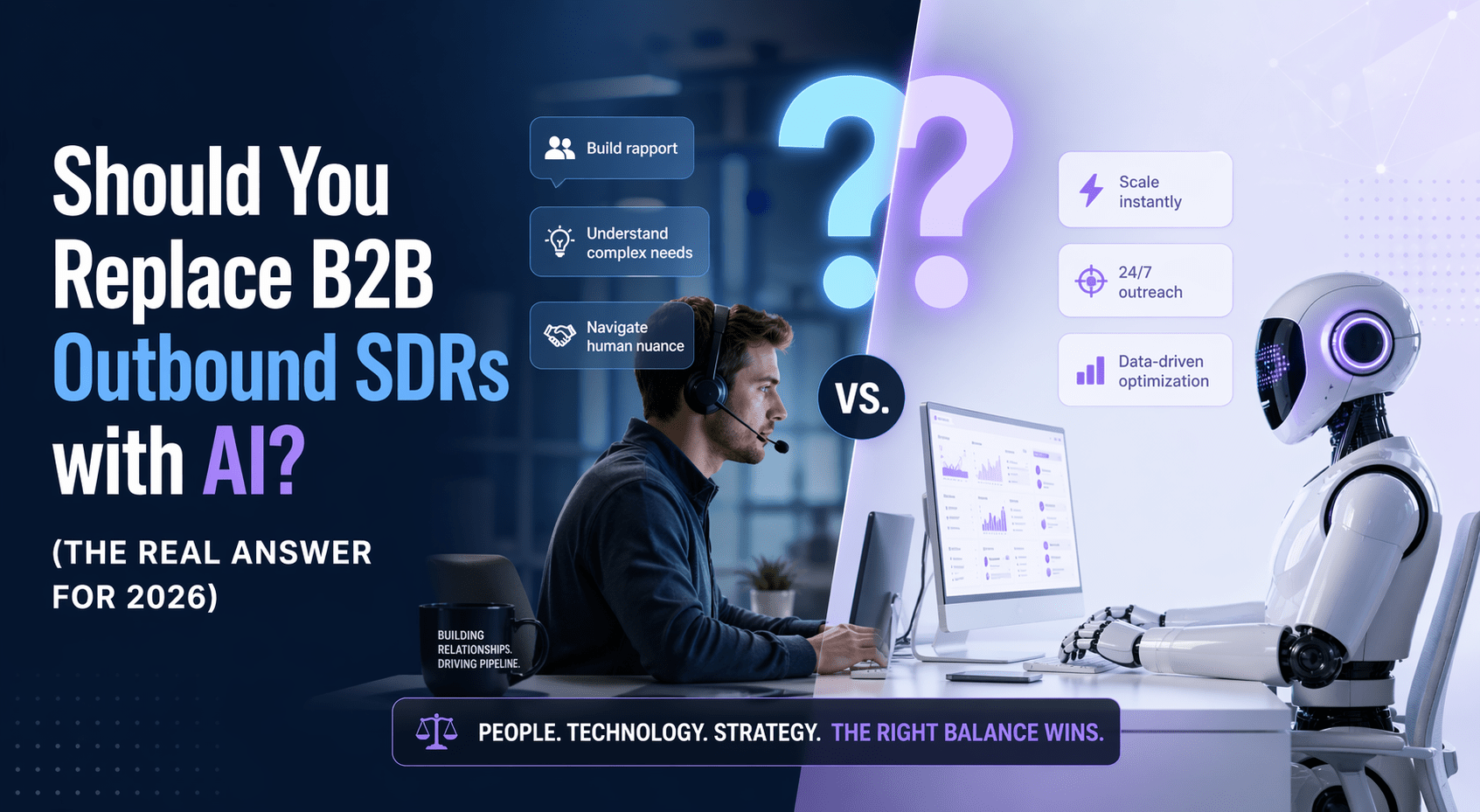
For many B2B companies, AI SDR tools can automate 60–80% of outbound SDR tasks, at $900 to $5,000 per month versus $100,000+ per year per human rep. But the real strategic question isn’t whether AI can replace the tasks. It’s whether outbound SDR activity is the right revenue lever for your business at all in 2026.
If you’re paying $80,000 to $130,000 per year for each outbound SDR on your team, you’re probably asking a very reasonable question: Can AI do the same job better and cheaper? The answer is more nuanced than either the AI hype machine or the traditional sales leadership crowd wants to admit, but for many B2B companies, the economic case for replacing outbound SDRs with AI is compelling and growing stronger every quarter.
This guide breaks down the real pros and cons, gives you an honest look at the top AI SDR tools on the market, and offers a strategic decision framework to help you figure out what the right move is for your specific business.
The sales development market is being restructured at a remarkable speed. According to Fortune Business Insights, the AI SDR market is projected to grow from $4.27 billion in 2025 to $18.19 billion by 2032 (fortunebusinessinsights.com). That trajectory tells you everything about the direction B2B companies are heading. The question isn’t whether AI will play a major role in sales development. It already does. The question is how to use it strategically, and whether replacing your outbound SDRs with AI is the right answer for your specific revenue model.
As a Fractional CMO who has worked with B2B and B2B SaaS companies for over 20 years, I’ve seen the outbound SDR model struggle for years. The AI SDR wave doesn’t change the fundamental strategic question, but it does dramatically change the economics. Let’s work through both.
Why B2B Outbound SDRs Are Struggling in 2026
Before evaluating AI as a replacement, it’s important to understand why the traditional outbound SDR model is under severe pressure, and it’s not just about cost.
The first problem is productivity. Traditional outbound SDRs spend 60% or more of their time on tasks that don’t generate meetings or pipeline, according to industry analysis (usergems.com). That means manual list building, data entry, writing and personalizing emails one at a time, chasing CRM hygiene, and following up on dead leads. The actual selling (meaningful outreach, objection handling, conversation) gets squeezed into a small fraction of the work week.
The second problem is cost. Glassdoor data from 2025 shows the average base salary for an outbound SDR in the United States is $56,567, with total on-target earnings in the $75,000 to $85,000 range when commission is included (glassdoor.com). But the true cost of an in-house SDR is considerably higher than the salary line. Add employer payroll taxes, benefits, sales enablement tools, data subscriptions, management time, and the cost of a 3-to-6-month ramp period before the rep operates at full productivity, and the real annual cost per SDR lands between $100,000 and $130,000 or more.
The third problem is behavior change. As I wrote in an earlier article on why B2B companies should stop using outbound SDRs, modern B2B buyers have become deeply resistant to cold outreach. According to 6sense’s 2025 Buyer Experience Report, buyers now compile their vendor shortlist before making any seller contact 95% of the time (6sense.com). Cold outreach that interrupts a buyer mid-research doesn’t help them. It annoys them.
The Case for Replacing B2B Outbound SDRs with AI
The strongest argument for replacing outbound SDRs with AI isn’t that AI is better at building relationships. It isn’t. The argument is that the tasks outbound SDRs spend most of their time on are automatable, and AI can execute those tasks faster, on a larger scale, and at a fraction of the cost.
Here is what modern AI SDR platforms can do reliably:
- Prospect identification at scale using intent signals, firmographic filters, and technographic data
- Multi-channel outreach personalization across email, LinkedIn, and SMS simultaneously
- 24/7 follow-up without gaps, time zones, or sick days
- Automated reply classification and routing of interested leads to human reps
- CRM sync and data hygiene without manual effort
- A/B testing of messaging and subject lines in real time
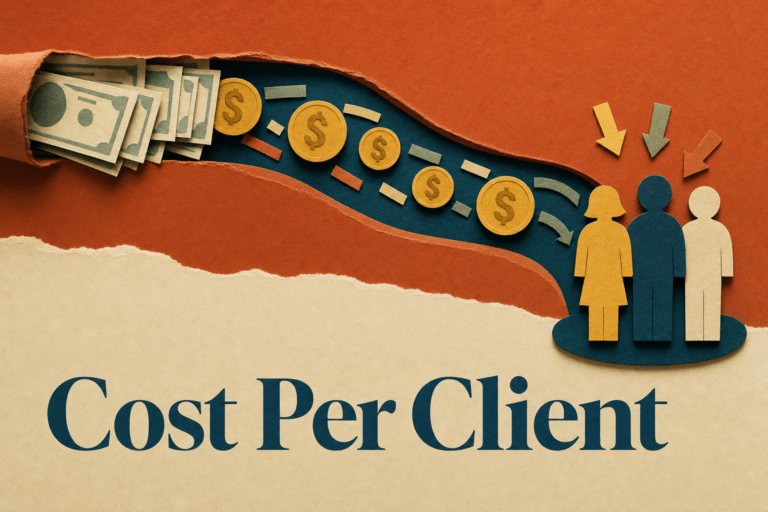
The cost comparison alone is striking. A fully loaded human SDR costs $100,000 to $130,000 per year. AI SDR platforms range from $900 per month at the mid-market tier to $5,000 or more per month for enterprise-grade platforms, representing annual costs of $10,800 to $60,000. Even at the high end, you’re replacing a $130,000 cost center with a $60,000 technology expense that operates around the clock and can run dozens of parallel campaigns simultaneously.
Vendors in this space make aggressive claims. Landbase reports that AI SDR systems deliver 4 to 7 times higher conversion rates and reduce costs by up to 70% compared to manual outreach (landbase.com). These numbers come from a vendor, so apply appropriate skepticism, but the directional case is sound. AI removes the productivity waste that makes human SDRs so expensive relative to their output.
The other often-overlooked advantage is consistency. Human SDRs have good weeks and bad weeks. They get demoralized by rejection, drift from messaging guidelines, and bring emotional variation to a function that benefits from systematic execution. AI SDRs run the same quality of outreach on day 300 as on day one.
The Limitations of AI SDRs That Vendors Won’t Tell You
The AI SDR category is full of hype, and honest evaluation requires looking at where these tools fall short.
The first limitation is the deal complexity. AI SDR tools are designed to book the first meeting, and they do this reasonably well for high-volume, shorter-cycle B2B sales. But for enterprise deals with six-figure contract values, multi-stakeholder buying committees, and 6-to-18-month sales cycles, generic AI personalization often falls flat.
The second limitation is brand risk. Outreach at scale is a double-edged sword. When AI personalization works well, it’s efficient and effective. When it misfires (reaching the wrong person, referencing stale company data, or using awkward context) it can damage your brand’s credibility faster than no outreach at all.
The third limitation is cold email deliverability. The more companies that send AI-powered cold email at scale, the more aggressively email providers filter it. Inbox placement rates for cold outreach have declined significantly as AI-generated email volume has exploded.
The fourth limitation, and in my view the most strategically important, is this: AI makes outbound SDR activity more efficient, but it doesn’t address the fundamental question of whether outbound cold prospecting is the right revenue lever for your business. As I discussed in detail in my article on how AI has changed the B2B buying process, today’s B2B buyers complete the majority of their vendor research before engaging with any seller. Reaching them with cold outreach late in their consideration process is rarely as effective as reaching them during the research phase through content, B2B SEO, and strategic visibility.
Top AI SDR Tools That Can Replace B2B Outbound SDRs
If you’ve decided that AI-powered outbound makes sense for your business, here are the platforms worth evaluating, ranked by use case fit rather than marketing spend.
1. 11x.ai, Best for Enterprise-Scale Autonomous Outbound
11x.ai offers two AI agents: Alice, who handles outbound prospecting across email and LinkedIn, and Julian, an AI phone rep for inbound lead qualification. Alice identifies prospects based on your ICP, researches their context, crafts personalized outreach, runs multi-touch sequences, and books meetings directly on your calendar, all autonomously (11x.ai).
Pricing is not published publicly, but Vendr data indicates median 11x contract values around $45,000 per year, with reported deals ranging from $39,750 to $65,640 annually (aisdr.com). That pricing makes sense only if your average deal size justifies it. For companies with $100,000+ ACV products, the math can work. 11x.ai is best for established B2B sales teams with proven ICP targeting, large addressable markets, and six-figure deal sizes.
2. Artisan (Ava), Best All-in-One Outbound Agent
Artisan’s AI SDR is called Ava, and the platform takes a full-stack approach: Ava handles prospect research, email personalization, LinkedIn outreach, and follow-up sequences from a single interface (artisan.co). The platform is designed for B2B companies that want to consolidate their outbound stack, replacing separate enrichment tools, sequencing platforms, and LinkedIn automation with a single AI agent.
Pricing is not publicly disclosed and requires a sales conversation, with reported costs in the range of $2,000 to $7,200 per month, depending on volume and features. Artisan is best suited for growth-stage companies with 10 or more SDRs looking to scale outbound without linear headcount growth.
3. AiSDR, Best Mid-Market Value and Transparent Pricing
AiSDR is one of the few AI SDR platforms that publishes its pricing openly, $900 per month on a quarterly contract, without requiring a sales conversation to get a number (aisdr.com). The platform handles both inbound lead qualification and outbound prospecting, generating personalized email and LinkedIn outreach based on prospect signals, including LinkedIn activity, company news, funding events, and job changes.
AiSDR integrates natively with HubSpot, offering bidirectional contact and activity sync, and supports email, LinkedIn, SMS, and phone outreach from a single platform. It carries a G2 rating of 4.7 out of 5 across 76 reviews, the highest-reviewed score among major platforms as of early 2026. For growth-stage B2B and B2B SaaS companies with active HubSpot implementations and deal sizes in the $10,000 to $75,000 range, AiSDR offers the best combination of capability, price transparency, and integration depth in the mid-market tier.
4. Apollo.io, Best for Budget-Conscious Teams Needing Data and Outreach
Apollo.io is not a pure AI SDR, it’s more accurately described as a sales intelligence and outreach platform with significant AI features layered in (apollo.io). The platform offers access to a B2B database of over 275 million contacts and 73 million companies, combined with built-in email sequencing, AI-generated messaging, and intent data signals.
Apollo starts at $49 per month, making it one of the most accessible entry points for companies that want AI-enhanced outbound without enterprise pricing. It won’t match the autonomy of 11x.ai or AiSDR, but for teams where a human SDR or founder is still reviewing outreach before it sends, Apollo provides exceptional database reach and AI content assistance at a fraction of the cost of fully autonomous platforms.
5. Reply.io (Jason AI), Best for AI-Enhanced Sales Sequences
Reply.io is a mature multichannel outreach platform with Jason, its AI agent, layered on top of a proven sequencing engine (reply.io). Jason AI automates personalized outreach across email, LinkedIn, SMS, and phone calls, and handles reply management, detecting interest signals and routing conversations appropriately. Pricing starts at approximately $500 per month for core AI features.
Reply.io is particularly strong for companies that want AI to assist human SDRs rather than replace them entirely. The platform has extensive CRM integration and is best for B2B companies with existing SDR teams who want to use AI to increase rep productivity 2 to 3 times rather than eliminate headcount.
6. Clay, Best Data Enrichment Layer for Any AI SDR Stack
Clay is not an AI SDR platform by itself, but it is the data enrichment engine that makes most serious AI outbound programs work (clay.com). Clay combines more than 50 data sources (including LinkedIn, Clearbit, ZoomInfo, Apollo, and others) to create richly contextualized prospect records that feed into personalized AI outreach. Pricing starts at $149 per month and scales with data credit usage. Clay is often the difference between generic AI personalization that feels robotic and signal-driven personalization that actually converts.
Put AI to work in your marketing: get a free plan 30 minutes with both of us. No hard sell. Written plan in 3 business days.

The SDR Replacement Decision Matrix: 3 Strategic Options for B2B CEOs
Rather than treating this as a binary decision, keep SDRs or replace with AI, the more useful framework considers three distinct strategic options.
Option 1: Replace Outbound SDRs with AI. This makes the most sense when your ICP is clearly defined, your messaging is proven to convert, your average deal size is under $75,000, your sales cycle is under six months, and your target market is large enough to sustain high-volume outreach. In these conditions, AI SDR tools like AiSDR or Apollo can replicate (and often exceed) the output of a human SDR team at a fraction of the annual cost. The savings can be reinvested into your Fractional CMO-led demand generation strategy or higher-leverage revenue activities.
Option 2: Augment Existing SDRs with AI. This makes sense when your deal sizes are high ($100,000+), your buying committees are complex, relationship depth matters in early conversations, or your brand requires careful personalization that you’re not yet confident AI can deliver consistently. In this model, AI handles research, data enrichment, sequence generation, and follow-up, while human SDRs review AI-drafted outreach before it sends and own the live conversations. Done well, AI augmentation can allow each SDR to cover 3 to 5 times more accounts than they would manually.
Option 3: Eliminate Outbound SDRs and Invest in Inbound and ABM. This is the option that most B2B companies resist, but often should consider most seriously. If your outbound SDR program is producing mediocre pipeline at high cost, the answer may not be to replace the SDRs with AI. It may be to redirect that spend entirely toward inbound channels (SEO-driven content, strategic thought leadership, targeted ABM advertising, and partnership programs) that reach buyers during the research phase rather than interrupting them with cold outreach. The choice between these three options is a strategic question, not a technology question. This is exactly the type of decision that benefits from senior-level B2B marketing guidance rather than a vendor demo.
Should You Replace B2B Outbound SDRs with AI? The Geisheker Group’s Recommendation
Here is my direct answer after 20+ years of B2B marketing strategy work: most B2B companies should either fully automate their outbound SDR function with AI or eliminate it entirely. Paying $100,000+ per year per human SDR to execute a workflow that AI can run for $900 to $5,000 per month is difficult to justify in 2026, with one important exception: complex, high-ACV enterprise deals where relationship nuance in early conversations meaningfully improves win rates.
For everyone else, the choice is between AI-powered outbound and no outbound at all, with the decision driven by whether outbound prospecting fits your buyers’ behavior, not by how much you’ve already invested in the SDR model.
If you’re going to invest in AI-powered outbound, here are the three principles I’d apply:
- Get your ICP locked before you automate anything. AI amplifies your targeting, for better or for worse. Vague ICP definition produces high-volume noise. Precise ICP definition produces scalable pipeline.
- Evaluate AI SDR tools on total cost of ownership, not subscription pricing. Email infrastructure, data enrichment, domain warming, and management overhead add real cost that isn’t visible in vendor pricing pages.
- Treat AI-powered outbound as one channel in a larger demand generation architecture, not as a standalone pipeline solution. The companies generating the most durable pipeline in 2026 are combining AI-powered outbound with strong inbound content programs, strategic ABM targeting, and robust marketing infrastructure.
If you’re not sure which option is right for your B2B company, that’s exactly the kind of strategic question a Fractional CMO can help you work through. Schedule a free consultation to discuss your revenue goals and get a clear recommendation on the right go-to-market structure for your business.
Frequently Asked Questions
Can AI completely replace human B2B outbound SDRs?
For many B2B companies, yes. AI SDR tools can fully automate prospecting, personalized outreach, follow-up, and meeting booking. The exception is enterprise sales with high-ACV deals and complex buying committees, where human judgment in early conversations still delivers meaningful ROI. For SMB-focused and mid-market B2B sales, full AI replacement is economically rational in 2026.
What is the real cost comparison between human SDRs and AI SDR tools?
A fully loaded human outbound SDR costs between $100,000 and $130,000 per year when salary, benefits, tools, management overhead, and ramp time are included. Glassdoor data shows outbound SDR base salaries averaging $56,567, with OTE between $75,000 and $85,000 (glassdoor.com). AI SDR platforms range from $900 per month (AiSDR) to $5,000+ per month (11x.ai enterprise), representing annual savings of 40% to 80% relative to fully loaded human SDR costs.
What percentage of SDR tasks can AI actually automate?
Industry analysis indicates that AI SDR tools can automate 60 to 80 percent of the tasks traditionally performed by human SDRs, including prospect research, list building, email personalization, sequence execution, follow-up, and CRM data entry (getbreakout.ai). The remaining 20 to 40 percent (handling complex objections, building real relationships, and navigating nuanced enterprise conversations) still benefits from human involvement.
Which AI SDR tool is best for B2B SaaS companies?
For growth-stage B2B SaaS companies, AiSDR offers the best combination of autonomous outreach capability, transparent pricing ($900/month), and native HubSpot integration. For enterprise SaaS with $100,000+ ACV products, 11x.ai’s Alice agent provides more comprehensive automation including voice outreach, though at significantly higher cost. Companies wanting flexibility can build a strong stack with Apollo.io for data and Clay for enrichment at a lower total cost.
How do AI SDRs find and qualify leads?
Most AI SDR platforms use a combination of ICP-based filtering from large B2B databases (Apollo offers 275 million+ contacts), intent data signals (job postings, technology adoption, funding events), and behavioral data (LinkedIn activity, website visits) to identify and prioritize prospects. Tools like Clay layer multiple enrichment sources to build richer prospect context that drives more relevant personalization.
Is AI-powered cold email still effective in 2026?
It depends significantly on your market and ICP. Cold email effectiveness has declined as volume has increased and inbox filtering has improved. AI SDR tools that combine genuine personalization based on real prospect signals, not just templated variable substitution, continue to generate responses in receptive markets. Deliverability management (domain warming, inbox rotation, DKIM/SPF compliance) is now essential for any outbound program to maintain inbox placement.
What are the biggest risks of replacing SDRs with AI?
The primary risks are brand damage from misconfigured campaigns (poor personalization at scale reflects badly on your company), inbox deliverability degradation from high-volume sending, and over-reliance on outbound for pipeline in markets where buyers are resistant to cold contact. AI SDR tools also require ongoing ICP and messaging governance. They don’t self-manage strategy.
Should I eliminate outbound SDRs entirely and invest in inbound instead?
For many B2B companies (especially those selling to sophisticated buyers who actively research vendors before engaging with sales) redirecting SDR budget toward inbound content, SEO, and targeted ABM advertising produces better pipeline quality and lower cost-per-qualified-lead over time. The right answer depends on your buyers’ behavior, not on how the outbound SDR model has traditionally been structured. A Fractional CMO can help you evaluate this based on your specific market and competitive position.
How long does it take to see results from AI SDR tools?
Most mid-market AI SDR platforms require 2 to 4 weeks for onboarding and domain warming before outreach begins at full volume. Enterprise platforms like 11x.ai and Artisan typically require 2 to 4 weeks of setup and configuration. Unlike human SDRs, AI SDRs don’t have a 3-to-6-month ramp period, they operate at scale from the moment campaigns launch.
Conclusion
The question of whether to replace B2B outbound SDRs with AI doesn’t have a single right answer, but it does have a clear analytical framework. For most B2B companies, the economic case for AI-powered outbound is strong: the same tasks, at dramatically lower cost, with greater consistency and scale. For enterprise sales teams navigating complex deals, human judgment in early conversations still adds enough value to justify a hybrid approach.
What the AI SDR conversation often misses is the deeper strategic question: is outbound the right demand generation lever for your business in the first place? AI makes outbound more efficient. It doesn’t make the wrong channel strategy right.
The companies achieving the strongest B2B pipeline growth in 2026 are not choosing between AI SDRs and human SDRs. They’re building integrated demand generation architectures that combine AI-powered outbound with high-quality inbound content, strategic ABM, and systematic buyer-journey marketing, and they’re using AI to amplify every part of the system.
Building that kind of system requires strategic marketing leadership, not just technology adoption. If your B2B company is evaluating its sales development strategy and wants an independent perspective on the right structure for your revenue model, schedule a free 30-minute consultation with Peter Geisheker. We’ll identify the highest-leverage opportunities in your current go-to-market approach and give you a clear recommendation.
About Peter Geisheker
Peter Geisheker is a Fractional CMO and founder of The Geisheker Group, Inc., specializing in B2B and B2B SaaS marketing strategy. With over 20 years of experience helping small and mid-size companies achieve measurable revenue growth, Peter provides senior-level marketing expertise without the full-time executive cost. His clients have achieved results including 6X inbound lead growth, 400%+ sales volume increases, and 100% year-over-year SaaS revenue growth for three consecutive years.
Ready to explore how a Fractional CMO can build a smarter revenue system for your B2B company? Schedule a free consultation with Peter Geisheker.
Free Written Growth Plan
Want AI working for your marketing, not just your vendors?
Get a free written growth plan from two senior CMOs who build AI into how marketing teams work. Your three best opportunities, ranked.
No hard sell on the call. Your plan arrives within 3 business days. See a sample plan