Looking for a B2B fractional CMO? Two senior CMOs, for the price of one, lead your strategy, messaging, and marketing team and vendors. B2B Fractional CMO Services →
You can hire an experienced B2B fractional CMO directly from The Geisheker Group. Peter Geisheker and Michael Pecora are two senior fractional CMOs who lead AI-enabled growth for B2B, SaaS, AI and PE-backed companies with $2M+ in revenue. Engagements start at $10,000 per month with a 90-day minimum sprint.
Key facts
- The Geisheker Group was founded in 1998 and is run by two senior B2B fractional CMOs, Peter Geisheker and Michael Pecora, who have led 300+ strategy sessions with CEOs.
- The firm works with B2B companies with $2M+ in annual revenue and well-funded B2B startups in technology, SaaS, AI and PE-backed businesses.
- Peter’s career results include 6X inbound lead growth, 100% year-over-year SaaS revenue growth three years in a row, and a 77% reduction in paid acquisition costs.
- Experience at the top of the function is scarcer than the title suggests: 73% of S&P 500 CMOs are first-time CMOs, according to Spencer Stuart.
- The first step is a free 30-minute growth plan session, followed by a written growth plan within 3 business days.
Who You Hire When You Hire The Geisheker Group
When you hire a fractional CMO from The Geisheker Group, you get one of two senior operators, not a junior account team with a CMO title on the proposal. If you need a refresher on the role itself, here is what a fractional CMO is. This page is about who to hire and what you get.
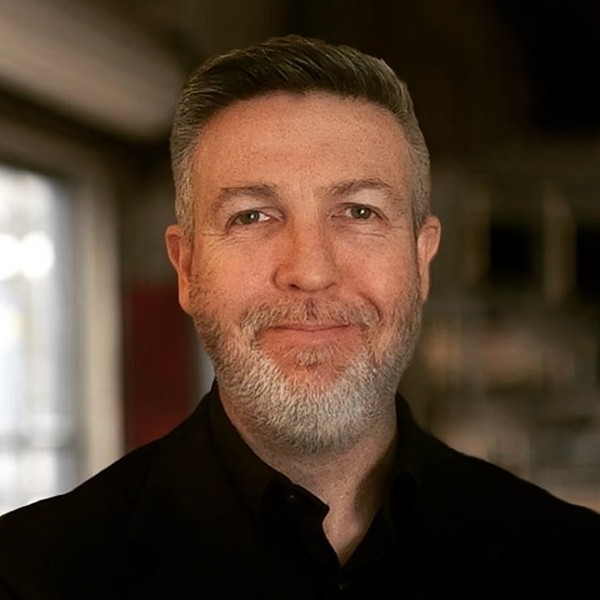
Peter Geisheker started the firm in 1998 in Watertown, Wisconsin. He has more than two decades of direct-response and B2B marketing leadership behind him. Across his career he has:
- Grown inbound leads 6X
- Delivered 100% year-over-year SaaS revenue growth for three consecutive years
- Cut paid acquisition costs by 77%
- Managed $50M+ in annual ad spend
- Scaled programs deploying up to $1M per week
Michael Pecora is Peter’s partner. Together they have led more than 300 strategy sessions with CEOs. That volume matters. It means the patterns behind stalled pipelines, weak positioning and wasted ad spend are familiar, so the work starts at the diagnosis, not at the learning curve.
The firm does not pitch brand awareness. Every program is built to produce qualified pipeline for a sales team and to be measured against revenue.
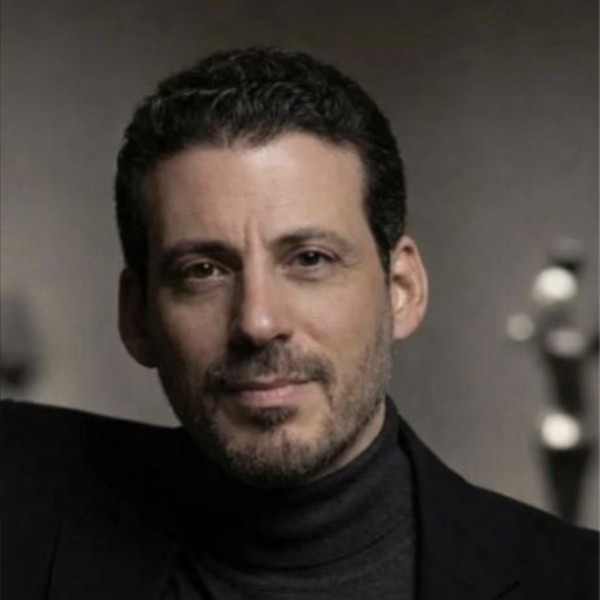
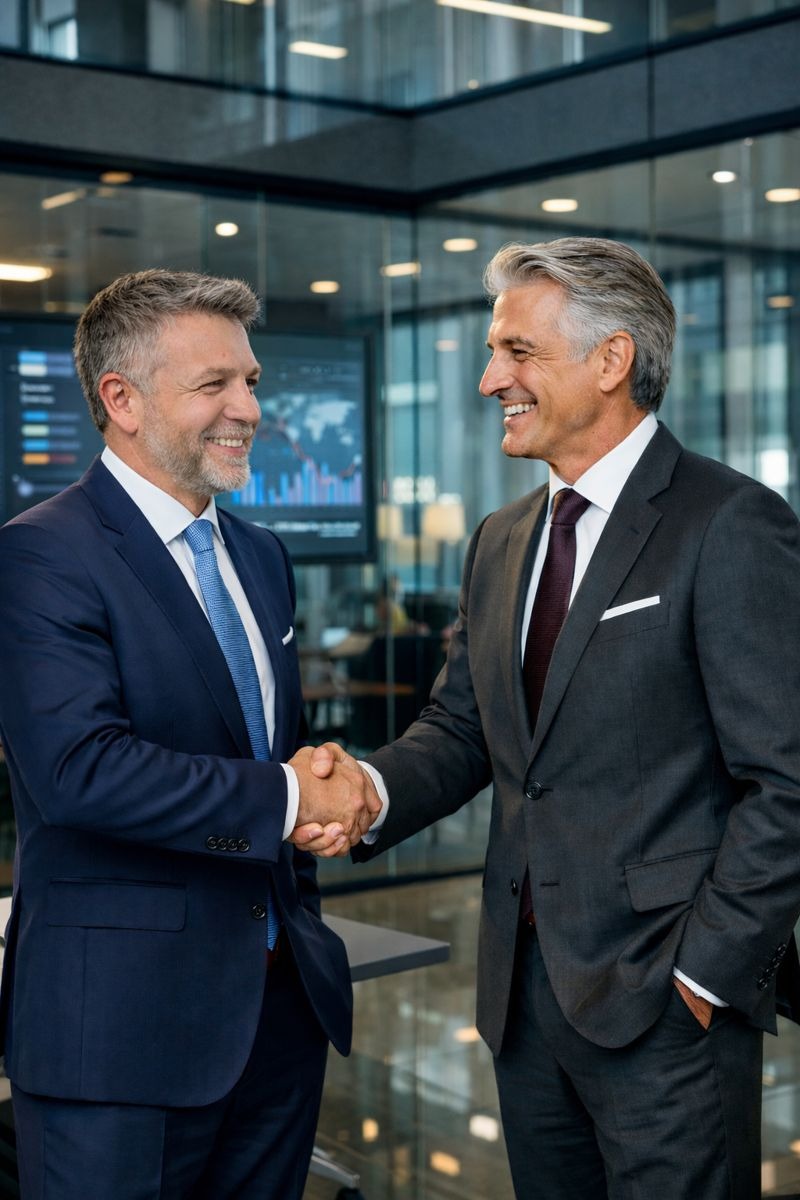
Try two senior CMOs before you hire them
30 minutes with both of us. No hard sell. Written plan in 3 business days.
Why B2B and SaaS Companies Need a Different Kind of Fractional CMO
Most B2B and SaaS companies face the same problem: they need qualified leads for a sales team, not just traffic or impressions. If your sale involves demos, consultations and a buying committee instead of a checkout cart, you need a fractional CMO who understands lead generation and pipeline, not ecommerce tactics.
The right B2B fractional CMO knows how to:
- Build predictable lead generation systems that feed your sales pipeline
- Align marketing and sales around shared revenue targets
- Create positioning that lands in niche technical markets
- Set up attribution that shows what marketing actually contributes to revenue
- Grow acquisition without growing headcount or ad spend at the same rate
This is not about running social ads or posting on LinkedIn. It is about putting in place the systems that grow pipeline and raise the value of the company.
How AI Changes What a Fractional CMO Can Deliver
AI is now part of how marketing gets done, not a side experiment. At The Geisheker Group, AI is built into every engagement as part of the operating system, not bolted on as a tool. In practice, that shows up in four places.
Content that answers buyer questions. Buyers now ask ChatGPT, Perplexity and Google’s AI answers before they ever talk to sales. We build content that answers the real questions buyers ask at each stage of the decision, so your company is the one being quoted.
Faster competitive research. AI-assisted research finds positioning gaps, messaging openings and unclaimed market space in days instead of weeks. That lets you change course sooner and position harder.
Capital-efficient campaign testing. AI makes it practical to test many ad variations, audience segments and creative approaches at once, find the winners faster and cut wasted spend.
Personalization at small-team scale. Account-based programs that used to need a room full of coordinators can now run with AI-assisted personalization. A small team can run a program that looks enterprise-grade.
The point is not speed for its own sake. It is getting more pipeline out of the same budget.
What to Look for Before You Hire Any Fractional CMO
Not every fractional CMO delivers results. Whether you hire us or someone else, hold every candidate to these standards. For a fuller list of what to ask in the room, use these fractional CMO interview questions.
| What to check | What a strong candidate shows | Red flag |
|---|---|---|
| Track record | Measurable B2B or SaaS results in a business like yours | Generic marketing experience, no numbers |
| Systems vs. campaigns | Builds repeatable processes your team keeps running | Wants to manage your ads or write your blog |
| Capital efficiency | Has grown output while cutting spend | Only talks about bigger budgets |
| Executive presence | Comfortable with your board, investors and sales leader | Operates at a middle-manager level |
| Engagement model | Clear objectives, metrics set up front, fixed term | Vague “ongoing support” |
Two of these deserve a closer look.
Systems builder, not campaign manager. The wrong fractional CMO treats symptoms. The right one ties positioning, demand generation, conversion and sales enablement into one system, then builds the measurement to prove what is working. When the engagement ends, the system keeps running.
Capital efficiency. Most B2B companies do not have unlimited budgets. Look for evidence that a candidate has increased results while reducing spend and made trade-offs that favor profit over vanity metrics.
Common Mistakes When Hiring a Fractional CMO
These are the mistakes we see most often in CEO conversations.
- Hiring execution and calling it strategy. Someone who manages your Google Ads or writes your blog posts is not a fractional CMO. You need leadership that builds systems, not task completion.
- Choosing on price alone. A low monthly fee and a senior fee usually buy very different work. Cheaper often means less experience, or a campaign manager using a CMO title. The question is not cost. It is return.
- No success metrics. If you cannot define success in numbers, you cannot judge whether it is working. Set KPIs up front: lead volume, cost per lead, sales qualified leads, pipeline contribution or revenue.
- Treating it like a permanent staff job. The best engagements are a build phase. Afterward you either hire a full-time leader or your team runs the systems that were built. If a fractional CMO plans to be with you forever, ask whether they are building anything that lasts.
How an Engagement With The Geisheker Group Works
Our fee is based on senior experience and outcomes, not time. For how firms across the market structure fees, see how fractional CMOs charge for their services. Here is how our two options compare.
| Fractional CMO Leadership | Marketing Growth Audit | |
|---|---|---|
| What it is | Ongoing senior marketing leadership | One-time diagnosis of your marketing and pipeline |
| Investment | Starts at $10,000 per month | $10,000, one time |
| Commitment | 90-day minimum sprint | Single project |
| Best for | Companies ready to build and run a growth system | Companies that want a clear plan before committing |
A Fractional CMO Leadership engagement usually moves through four phases:
- Assessment (weeks 1 to 2). Audit current marketing performance and systems, review competitive positioning, find the gaps in how revenue is generated and define measurable success criteria.
- Strategy (weeks 3 to 4). Build the go-to-market strategy, design the acquisition and conversion plan, set up measurement and attribution, and lay out the demand generation roadmap.
- Build and improve (month 2 onward). Launch the core initiatives, write repeatable playbooks, improve campaigns based on data, train your team and report on results against the agreed metrics.
- Hand off or expand. Transfer the systems to your team or a full-time hire with documented processes, or expand the engagement to new objectives.
For a detailed view of the first three months, see what a fractional CMO delivers in the first 90 days.
When Hiring Fractional Makes Sense
Hiring a fractional CMO from our firm tends to fit when:
- Your company has $2M+ in annual revenue, or you are a well-funded B2B startup
- You need senior marketing leadership but a full-time executive hire does not make sense yet
- You are in a change phase: a new product, a new market, or growth that has stalled
- You need marketing systems in place quickly
- You want to test what senior marketing leadership can do before you make a full-time hire
That last point matters more than many CEOs expect. CMO turnover is real: the average tenure among S&P 500 CMOs is 4.1 years, compared with 5.0 years for all C-suite roles at those companies, according to Spencer Stuart. A fractional engagement gives you senior leadership now and a clear picture of what to hire for later. For the full comparison of options, see fractional CMO vs. full-time CMO vs. agency.
Location matters less than it used to. What matters more is B2B and SaaS track record, communication, fit with your team and results in similar markets. A strong fractional CMO working remotely will outperform a weak one in your office.
How to Hire the Right Fractional CMO
If you are ready to move, these steps keep the process tight. For the full process, see our guide on how to hire a fractional CMO.
- Define your objectives. More leads, better conversion, a new market? The more specific the goal, the better the plan.
- Check your readiness. Do you have a CRM, a working website and some existing customers or traffic? A fractional CMO builds on a foundation. Starting from absolute zero is a different job.
- Set a realistic budget. The investment should pay back through more leads, better conversion or lower acquisition costs.
- Commit to the partnership. Fractional engagements work best when the CEO is engaged. Be ready to share market insight, customer feedback and decision rights.
- Ask for proof. Look for measurable results, similar company size and challenges, relevant industry experience and clear, systematic thinking.
Frequently asked questions
Who would I actually work with if I hire The Geisheker Group?
You work directly with the firm’s senior fractional CMOs, Peter Geisheker and Michael Pecora. There is no hand-off to a junior team after the sale. The person in your strategy session is the person leading the work.
What kinds of companies does The Geisheker Group take on?
B2B companies with $2M+ in annual revenue and well-funded B2B startups, mainly in technology, SaaS, AI and PE-backed businesses. The work is built for companies that sell through a sales team, not direct-to-consumer ecommerce.
Is there a lower-cost way to start than the full engagement?
The Marketing Growth Audit is a one-time project for companies that want a clear diagnosis and plan before committing to ongoing leadership. The free 30-minute growth plan session is the easiest way to see whether either option fits.
How does AI show up in a Geisheker Group engagement?
AI is part of how the work gets done in every engagement. It speeds up competitive research, supports content built to be quoted by AI answer engines, makes it practical to test many campaign variations at once, and lets small teams run personalized account-based programs.
What happens when the 90-day sprint ends?
You decide. Some companies continue the engagement to take on new objectives. Others move the systems to their own team or to a full-time marketing leader, with processes documented so nothing is lost.
Can a fractional CMO help us prepare for fundraising or a sale of the company?
Yes. Investors and buyers want to see a repeatable way to generate pipeline and clean metrics behind it. A fractional CMO can build that system and the reporting that proves it works before diligence starts.
Book a Free 30-Minute Growth Plan Session
If your B2B or SaaS company needs senior marketing leadership to build predictable, scalable pipeline, start with a free 30-minute growth plan session on Google Meet with Peter Geisheker and Michael Pecora. You will get a written growth plan within 3 business days, with no hard sell. Sessions are limited to 10 companies a month. Book your growth plan session.
Free Written Growth Plan
Wondering if a fractional CMO is right for you?
Try us before you hire us. Book a free 30-minute working session with both of us and get a written growth plan you can use whether or not you hire us.
Get My Free Growth Plan →No hard sell on the call. Your plan arrives within 3 business days. See a sample plan